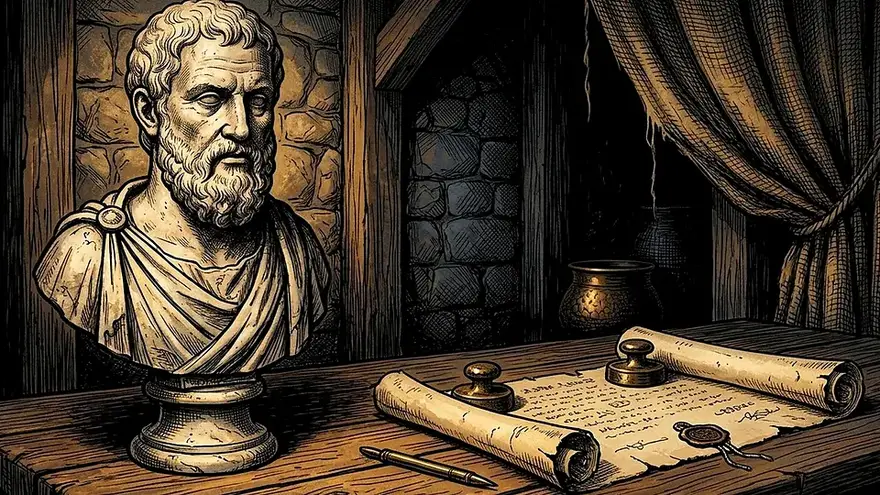
Named in Revelation 2:6 (Ephesus) and 2:15 (Pergamum) directly alongside 'the teaching of Balaam' (2:14), the Nicolaitans were an accommodationist movement inside Roman Asia Minor's churches teaching Christians they could eat idol-sacrificed meat and join pagan trade-guild immorality without compromising faith. Early church father Irenaeus linked them to followers twisting Nicolas of Antioch (Acts 6:5), reinforced by a Greek-Hebrew Balaam wordplay.
Ephesus and Pergamum: why Jesus hates their *works*, not their souls
Read the seven letters of Revelation 2–3 and one sharp verb leaps out. Commending sleepless, orthodox Ephesus in Revelation 2:6, the risen Jesus says: 'Yet this you have: you hate the works of the Nicolaitans (ta erga tōn Nikolaitōn), which I also hate!' Nine verses later, addressing imperial stronghold Pergamum—site of 'Satan's throne' and Rome's provincial emperor-cult temple—Jesus warns in 2:15: 'So also you have some who hold the teaching of the Nicolaitans. Therefore repent!'
Notice the careful moral boundary: Jesus never says 'I hate the Nicolaitans as human beings.' He hates their exploitative practices (ta erga) and urges deceived church members in Pergamum to turn back.
Revelation 2:6, 15–16“Revelation 2:6 — 'Yet this you have: you hate the works of the Nicolaitans, which I also hate.' · Revelation 2:15–16 — 'So also you have some who hold the teaching of the Nicolaitans. Therefore repent.'”
Why It Matters: Earliest Greek manuscripts read homoiōs ('likewise,' directly equating the Nicolaitans in v. 15 with 'Balaam' in v. 14—corrupted by identical medieval Greek vowel sounds into ho misō, 'which I hate'!), unlocking a bilingual pun: Greek Niko-laos ('conquer the people') translates Hebrew Bil'am ('swallow the people')!
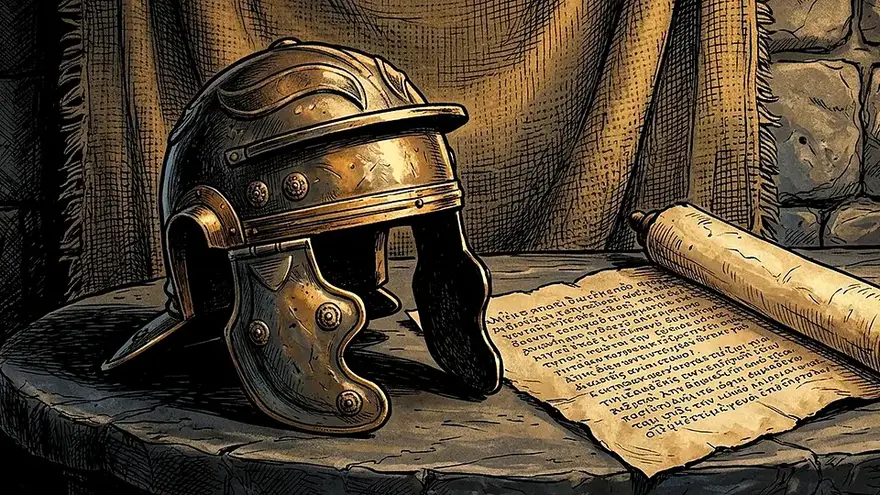
Scrolls & Archaeology: In Byzantine Greek pronunciation, ΟΜΟΙΩΣ (homoiōs, 'likewise,' preserved in 4th/5th-century Codices Sinaiticus, Alexandrinus, and Ephraemi) and Ο ΜΙΣΩ (ho misō, 'which I hate,' echoed from Rev 2:6 into Erasmus's 1516 printed Greek text) sounded nearly identical due to Greek iotacism. Writing around 180 CE, Bishop Irenaeus of Lyons (Against Heresies 1.26.3) reported that these Asia Minor house-church libertines claimed authority from Deacon Nicolas of Antioch (one of the Seven in Acts 6:5) to attend pagan trade-guild banquets serving meat offered to imperial and civic gods.
Roman trade guilds, Emperor worship, and 'the teaching of Balaam'
What were the Nicolaitans actually teaching? Revelation 2:14–15 defines them by direct Greek parallelism ('some holding the teaching of Balaam... so also [houtōs kai] some holding the teaching of the Nicolaitans,' echoed by 'Jezebel' in Thyatira, 2:20): urging Christians 'to eat food sacrificed to idols (eidōlothyta) and practice sexual immorality (porneia).'
In Ephesus and Pergamum, every artisan belonged to a trade guild (collegium) whose banquets honored patron gods and divine Caesar with sacrificial meat, wine libations, and sexual license. Boycotting meant financial ruin—so Nicolaitan teachers preached 'spiritual freedom' to blend right into pagan temple feasts!
Revelation 2:14 & Acts 15:29“Revelation 2:14 — 'You have some there who hold the teaching of Balaam, who taught Balak to put a stumbling block before the sons of Israel, so that they might eat food sacrificed to idols and practice sexual immorality.' · Acts 15:29 — 'Abstain from what has been sacrificed to idols... and from sexual immorality.'”
Deacon Nicolas of Antioch (Acts 6:5): Irenaeus vs. Clement of Alexandria
Did a real leader named Nicolas start this group? Around 180 CE, Bishop Irenaeus of Lyons—raised at Smyrna in Asia Minor under John's disciple Polycarp—wrote in Against Heresies 1.26.3 (echoed by Hippolytus) that the sect claimed descent from Nicolas of Antioch, one of the original Seven deacons chosen alongside Stephen in Acts 6:5!
Soon after, Clement of Alexandria (Stromata 3.4) defended Deacon Nicolas's personal character: Nicolas himself lived chastely, once remarking that believers must 'subdue/abuse the flesh' (parachrēsasthai tē sarki, meaning ascetic self-denial)—only for rogue followers to twist his Greek phrase into 'indulge the flesh!'
Acts 6:5“And what they said pleased the whole gathering, and they chose Stephen, a man full of faith and of the Holy Spirit, and Philip, and Prochorus, and Nicanor, and Timon, and Parmenas, and Nicolas, a proselyte of Antioch.”
The clever Greek-Hebrew Balaam pun—and debunking the 'clergy vs. laity' myth
Look closer at Revelation 2:14–15 for a sharp bilingual pun. Greek Nikolaos fuses nikē ('conquest') + laos ('people'): 'Conqueror of the People.' In Hebrew wordplay (Talmud Sanhedrin 105a), Balaam (בִּלְעָם, Bil'am) splits into bela' ('swallow/destroy') + 'am ('people'): 'Destroyer of the People'! Like Balaam at Peor (Numbers 31:16), 'Greek Balaam' seduced churches from within.
Finally, skip the nineteenth-century internet myth claiming nikē + laos predicts 'clergy ruling over the laity.' In first-century Greek, laos meant the whole covenant people (never 'non-clergy'), and Revelation 2:14–15 defines the sin explicitly as pagan idol-banquet compromise.
Numbers 31:16 & 1 Corinthians 10:20–21“Numbers 31:16 — 'Behold, these, on Balaam's advice, caused the people of Israel to act treacherously against the LORD in the incident of Peor.' · 1 Corinthians 10:21 — 'You cannot drink the cup of the Lord and the cup of demons.'”
Three Parallel Accommodationist Groups in Revelation 2 (Plus One Modern Myth)
How Revelation 2 links Ephesus, Pergamum, and Thyatira—and why first-century history refutes modern etymology myths.
| Name & Passage | City Addressed | Core Teaching / Claim | Historical Reality |
|---|---|---|---|
| Nicolaitans (Rev 2:6, 15) | Ephesus & Pergamum | Safe for Christians to join pagan guild idol-feasts & license | Traced by Irenaeus to sect using name of Nicolas (Acts 6:5) |
| Teaching of Balaam (Rev 2:14) | Pergamum | Old Testament prototype (Numbers 25 & 31:16) of idol seduction | Hebrew Bil'am ('destroyer of people') puns on Greek Nikolaos |
| Prophetess 'Jezebel' (Rev 2:20) | Thyatira | Rival prophetess promoting trade-guild idol meat & 'deep things' | Echoes Queen Jezebel blending Baal worship into Israel |
| 'Clergy Over Laity' Myth | 19th-c. polemic | Splits nikē + laos into 'priests ruling laypeople' | Anachronistic: 1st-c. laos meant 'whole people,' never 'laity' |
What to Remember
- Notice Jesus's exact wording in Revelation 2:6: He hates 'the works (ta erga) of the Nicolaitans,' targeting destructive compromise while calling Pergamum's members to repent.
- Revelation 2:14–15 defines Nicolaitan teaching via direct parallelism ('teaching of Balaam... so also teaching of the Nicolaitans'): blending comfortably into Roman civic idol-banquets and sexual license.
- Greek Nikolaos ('conqueror of the people') forms a sharp bilingual pun on Hebrew Balaam ('swallower/destroyer of the people'), while Irenaeus traced their slogan to rogue followers of Deacon Nicolas (Acts 6:5).