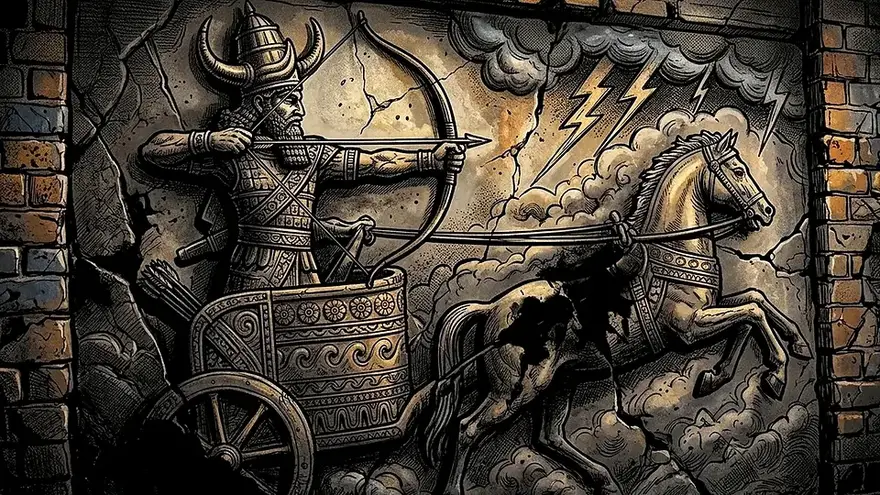
In Revelation 6:1–8, when the Lamb breaks the first four seals, four riders gallop forth echoing Zechariah 1:8 and 6:1–8: a White horse (imperial military conquest armed with a bow, toxon), a Fiery Red horse (civil bloodshed), a Black horse (famine rationing staple grain while sparing elite luxuries), and a Pale Green (chlōros) horse named Death trailed by Hades.
Rooted in Zechariah: why the Lamb Himself breaks the four seals
Pop culture treats the Four Horsemen like freestanding horror villains, yet first-century Jewish listeners heard two Old Testament passages colliding at once. Six hundred years earlier, Zechariah twice saw four colored horse teams—red, black, white, and dappled—patrolling the earth for YHWH (Zechariah 1:8; 6:1–8), paired here with Ezekiel 14:21's four classic covenant judgments: sword, famine, wild beasts, and plague.
Crucially, watch whose hand snaps each wax seal in Revelation 6:1: the slaughtered Lamb standing at God's throne. Imperial violence is never a rival superpower spiraling beyond God's sovereignty; breaking the seals exposes what military empire always breeds once its thin veneer of peace cracks.
Zechariah 6:2–3 & Ezekiel 14:21“Zechariah 6:2–3 — 'The first chariot had red horses, the second black horses, the third white horses, and the fourth chariot dappled horses.' · Ezekiel 14:21 — 'My four disastrous acts of judgment—sword, famine, wild beasts, and pestilence.'”
Why It Matters: 'A measure of wheat for a penny' sounds like an abundant bargain to modern ears, when in 1st-century Roman economics it meant 100% of a laborer's daily wage barely bought survival calories for one mouth (~10x famine inflation) while aristocrats' wine went untouched!
Scrolls & Archaeology: Roman biographer Suetonius (Domitian 7.2) records an uncanny historical backdrop in 92 CE—right when many date Revelation—when Emperor Domitian issued an edict ordering half the provincial vineyards in Asia Minor cut down amid severe grain shortages, provoking fierce uproar across the seven churches' cities. In the Hippocratic medical corpus (Prognostic 2), Revelation 6:8's color adjective chlōros (root of English 'chlorine' and 'chlorophyll') describes the sickly yellowish-green skin of a dying plague victim or fresh corpse.
The White Horse debate: Christ, Antichrist, or Rome's Parthian nightmare?
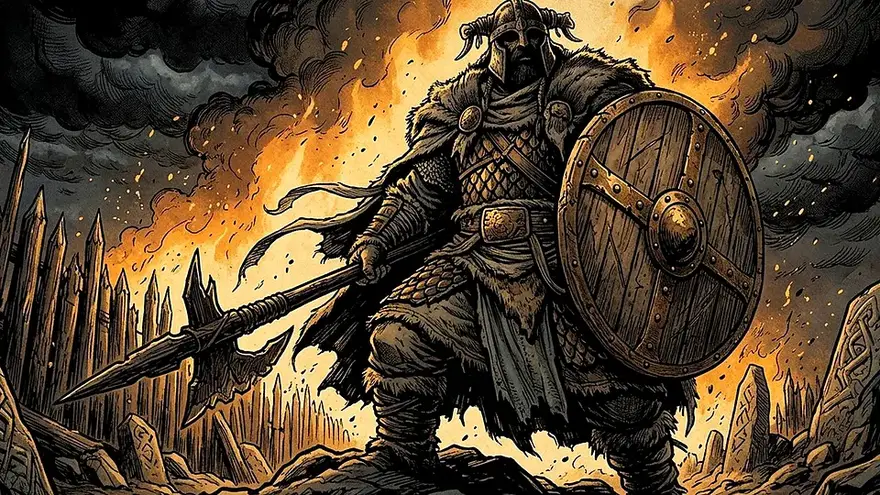
Rider #1 sits on a white horse holding a bow (toxon) and wearing a victor's wreath (stephanos), riding out 'conquering and to conquer' (Revelation 6:2). In 180 CE, Irenaeus linked him to Christ's gospel (pointing to Revelation 19:11), while twentieth-century preachers recast him as a counterfeit Antichrist.
Most modern scholars spot two decisive first-century clues: first, Jesus IS the Lamb breaking the seal—He isn't simultaneously inside a quartet of plagues! Second, Roman generals never carried bows, whereas Rome's undefeated eastern terror—Parthian mounted archers on white horses, who crushed Roman legions in 53 BCE and 62 CE—personified military conquest, triggering Fiery Red civil slaughter (#2, sphaxousin).
Revelation 6:2, 4“And I looked, and behold, a white horse! And its rider had a bow, and a crown (stephanos) was given to him, and he came out conquering, and to conquer... And out came another horse, bright red; its rider was permitted to take peace from the earth.”
The Black Horse's scales: starving workers while luxury wine stays untouched
Rider #3 holds balance scales (zygon)—Ezekiel 4:16's emblem of siege bread rationing—while a voice quotes brutal Roman inflation: 'A quart (choinix) of wheat for a denarius, and three quarts of barley for a denarius, and do not harm the oil and wine!' Every laborer in Asia Minor felt that math.
One silver denarius was a worker's entire daily wage (Matthew 20:2), and one choinix of wheat fed a single adult—roughly ten times normal grain prices, forcing whole families onto coarse barley with nothing left for shelter. Meanwhile, echoing Emperor Domitian's 92 CE vineyard controversy, rich estates' luxury olive oil and wine go untouched.
Revelation 6:5–6“Its rider had a pair of scales in his hand. And I heard what seemed to be a voice... saying, 'A quart of wheat for a denarius, and three quarts of barley for a denarius, and do not harm the oil and wine!'”
'Hippos Chlōros': not a gentle white steed, but cadaver-green Death
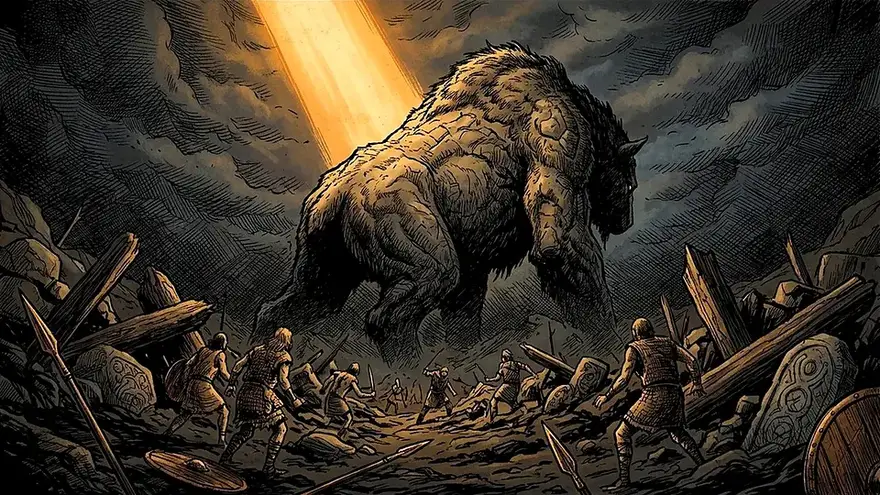
Traditional English Bibles called the fourth steed a 'pale horse,' making readers picture another white horse. John's Greek word is far more visceral: chlōros—the exact root of English 'chlorine' and 'chlorophyll'! Used in Mark 6:39 for yellowish-green grass, chlōros was the standard medical term in Hippocrates and Galen for the sickly greenish-gray pallor of gangrene and decaying corpses.
Alone among the four, this rider bears a personal name: Death (Thanatos), with Hades (the personified grave) trotting directly behind to scoop up the fallen. Together they wield all four judgments of Ezekiel 14:21—sword, famine, pestilence (thanatos, translating Hebrew dever), and wild beasts—over a quarter of the earth.
Revelation 6:8“And I looked, and behold, a pale green (chlōros) horse! And its rider's name was Death, and Hades followed him. And they were given authority over a fourth of the earth, to kill with sword and with famine and with pestilence and by wild beasts.”
The Four Horsemen of Revelation 6:1–8 Decoded
How horse color, equipment, and first-century Roman realities form a single causal chain of imperial collapse.
| Seal & Color | Equipment Held | First-Century Meaning | How It Contrasts With Christ |
|---|---|---|---|
| 1st: White (leukos) | Bow (toxon) & victor's stephanos | Military Conquest (Parthian-style invasion appetite) | Rev 19:11–15 Christ wears many diadēmata & wields only the sword of His mouth |
| 2nd: Fiery Red (pyrros) | Great sword (machaira megalē) | Civil War & internal mutual slaughter shattering Pax Romana | Exposes Rome's 'peace' as held together solely by violence |
| 3rd: Black (melas) | Balance scales (zygon) | Famine & hyperinflation starving workers while sparing elite wine | God's New Jerusalem gives water and fruit 'without price' (Rev 21:6; 22:2) |
| 4th: Corpse-Green (chlōros) | Followed by Hades (the Grave) | Death & Plague (thanatos) sweeping up war's aftermath | Risen Christ holds 'the keys of Death and Hades' (Rev 1:18) |
What to Remember
- Revelation doesn't invent 'Pestilence' as Rider #1: the White Horse carries a composite bow (toxon), evoking Rome's undefeated eastern terror—mounted Parthian conquerors—unleashing the Domino chain of War, Famine, and Death.
- The Black Horse's scales expose imperial inequality: staple wheat skyrockets to an entire day's wage (one denarius) while wealthy estates' luxury olive oil and wine go untouched (Revelation 6:6).
- Greek chlōros on the fourth horse means corpse-green (the root of 'chlorophyll' and 'chlorine'), naming the rider Death with Hades following to swallow the dead.