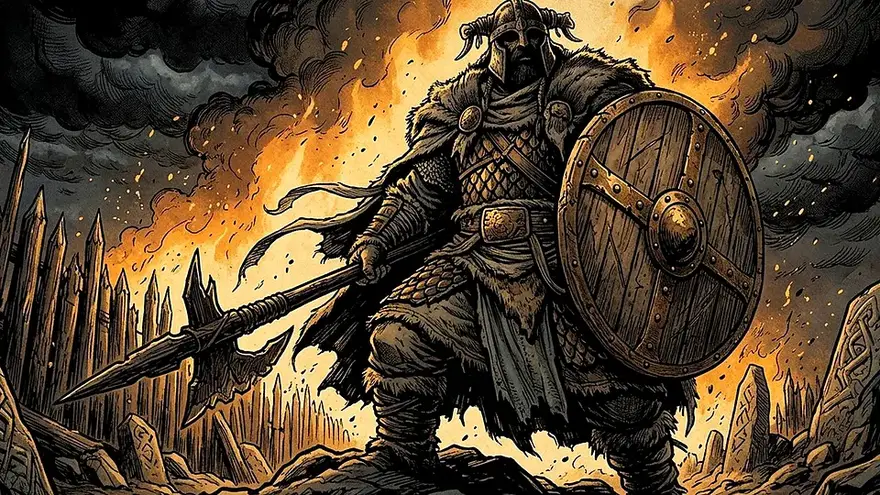
In Ezekiel 38:2, Gog is an individual ruler from the land of Magog in ancient Anatolia (modern Turkey), widely linked to seventh-century BCE Lydian king Gyges (called Gugu of Mat-Gugi in Assyrian clay annals). Hebrew nesi rosh means 'chief prince' of Meshech and Tubal—not Russia—before Revelation 20:8 widens 'Gog and Magog' into a global symbol of final rebellion.
Why 'Rosh' in Ezekiel 38:2 means 'chief' in Hebrew—never 'Russia'
During the Cold War, prophecy bestsellers like Hal Lindsey's The Late Great Planet Earth pointed to older translations of Ezekiel 38:2 ('prince of Rosh, Meshech, and Tubal') and claimed Rosh was Russia, Meshech was Moscow, and Tubal was Tobolsk! Basic Hebrew grammar dismantles that sound-alike myth in seconds.
In Biblical Hebrew, rosh (רֹאשׁ) is the ordinary noun for 'head' or 'chief' (as in Rosh Hashanah), which is why the KJV, ESV, NIV, and JPS translate nesi rosh 'chief prince' of Meshech and Tubal. Assyrian annals locate Mushki (Meshech) and Tabal (Tubal) in Iron Age Anatolia (modern Turkey), fifteen centuries before medieval Rus' traders named Russia.
Ezekiel 38:2–3 (ESV)“Son of man, set your face toward Gog, of the land of Magog, the chief prince (nesi rosh) of Meshech and Tubal, and prophesy against him.”
Why It Matters: Because Greek Septuagint left common Hebrew noun rosh ('head/chief,' used over 600 times in the OT!) untranslated as Rhōs, 19th-century prophecy charts equated sound-alike 'Rosh' with 'Russia'—a medieval Scandinavian Viking Rus' name unknown until ~800 CE!
Scrolls & Archaeology: Housed in the British Museum, Assyrian King Ashurbanipal's ten-sided Rassam Cylinder (BM 91026, c. 643 BCE) identifies Ezekiel's backdrop in Iron Age western and central Anatolia: King Gyges of Lydia—spelled Gūgu of Māt Gūgi ('Gog of the Land of Gog')—fighting alongside neighboring Anatolian kingdoms Mushku (Meshech/Phrygia) and Tabalu (Tubal/Cappadocia). Grammatically, Hebrew nĕśîʾ rōʾš mirrors kōhēn hā-rōʾš ('chief priest,' 2 Kings 25:18) and lacks the conjunctive waw ('and') required before Meshech if Rosh were the first of three separate countries.
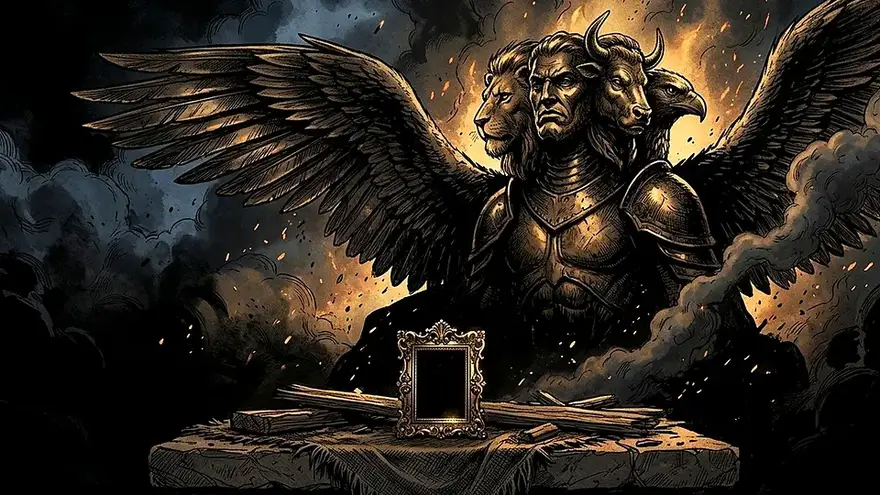
Assyrian cuneiform 'Gugu': the 7th-century BCE Anatolian king behind Gog
Where did exiled prophet Ezekiel (writing beside Babylon's canals around 585 BCE) find the names Gog and Magog? Genesis 10:2 lists Magog beside Javan (Ionian Greece), Tubal, and Meshech on Israel's northern Anatolian horizon, while Nineveh's royal library supplied the missing link on baked clay.
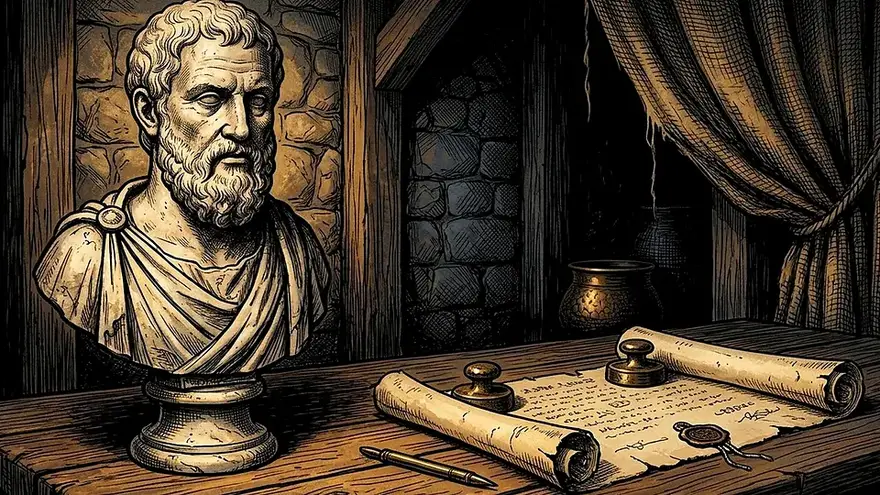
Seventh-century BCE cuneiform prisms of Assyrian king Ashurbanipal describe a famed western Anatolian monarch named Gugu—known to Greek historian Herodotus as fabulously wealthy King Gyges of Lydia (c. 680–644 BCE)—whose realm Akkadian scribes called Māt Gūgi ('Land of Gog,' matching Hebrew Ma-gog)! Ezekiel takes that legendary northern ruler and surrounds him with far-flung allies from Persia, Cush (Sudan), and Put (Libya) along every edge of the known map.
Genesis 10:2 & Ezekiel 38:5–6“Genesis 10:2 — 'The sons of Japheth: Gomer, Magog, Madai, Javan, Tubal, Meshech, and Tiras.' · Ezekiel 38:5 — 'Persia, Cush, and Put are with them... Gomer and all his hordes; Beth-togarmah from the uttermost parts of the north.'”
Why Ezekiel places chapters 38–39 AFTER the Dry Bones resurrection
Look at the dramatic sequence inside Ezekiel's scroll. In chapters 36–37, exiled Israel has already risen out of Babylon's grave like the Valley of Dry Bones, united under one Davidic shepherd, and settled peacefully in 'unwalled villages' without bars or gates (Ezekiel 38:11).
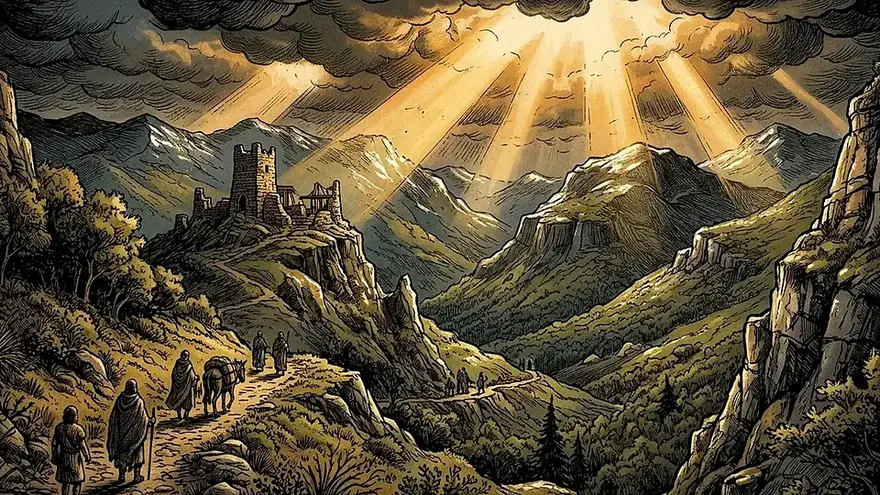
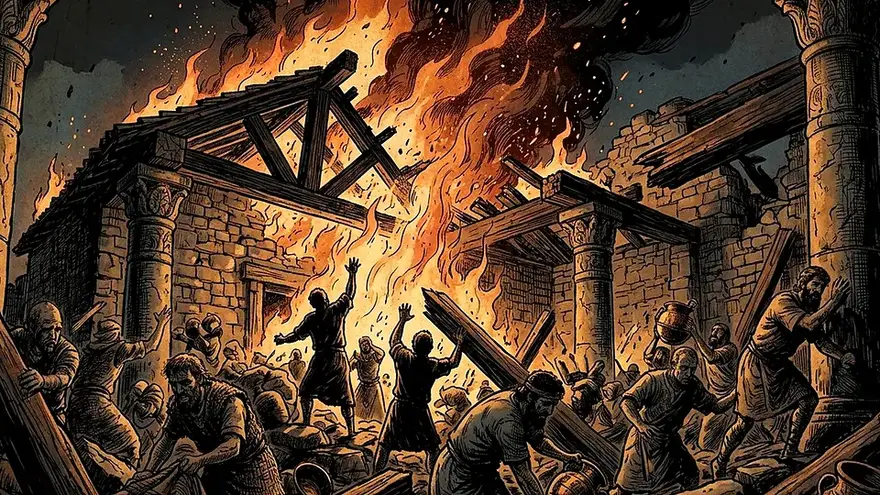
Just when restoration looks defenseless, one final horde sweeps down from 'the uttermost parts of the north' (yarketei tzafon—both Babylon's real invasion corridor and Canaan's mythic mountain of chaos). Yet Israel never draws a blade: YHWH shatters Gog's army on the mountains so completely that villagers burn leftover wooden shields as fuel for seven years (Ezekiel 39:9) before Ezekiel's New Temple opens.
Ezekiel 38:11 & 39:9“Ezekiel 38:11 — 'I will go up against the land of unwalled villages; I will fall upon the quiet people who dwell securely.' · Ezekiel 39:9 — 'They will make fires of the weapons and burn them... for seven years.'”
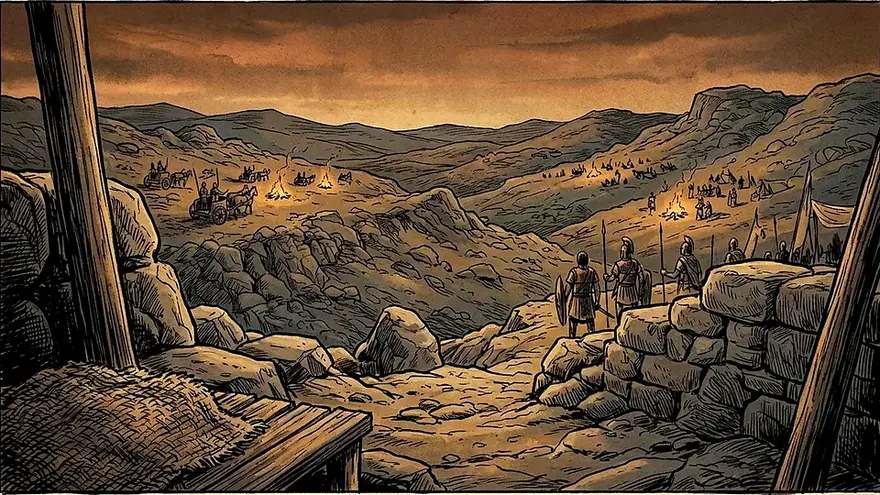
Watch what Revelation 20:8 changes: 'Gog and Magog' become all four corners
Six centuries later, John reaches back to Ezekiel 38–39 near the end of Revelation—and deliberately rewrites both grammar and geography! In Ezekiel 38:2, Gog is a ruler and Magog is his northern land ('Gog of the land of Magog'); in Revelation 20:8, they become a paired title: 'Gog and Magog.'
Even sharper, John erases single-nation map-pinning: Satan deceives the nations 'at the four corners of the earth, Gog and Magog'! Just as Revelation uses 'Babylon' for empire in any era, John turns Ezekiel's ancient northern invader into universal shorthand for humanity's final siege against God's saints—ended instantly by fire from heaven before New Creation dawns.
Revelation 20:7–9“Satan will be released from his prison and will come out to deceive the nations that are at the four corners of the earth, Gog and Magog, to gather them for battle... and fire came down from heaven and consumed them.”
How 'Gog and Magog' Evolved Across 1,300 Years of Ancient Texts
Tracing the names from Genesis 10 and Assyrian clay prisms through Ezekiel, Qumran, and Revelation 20.
| Source & Era | Exact Phrasing | Geographical & Theological Meaning |
|---|---|---|
| Genesis 10:2 & Assyrian Annals (7th c. BCE) | Magog / Gūgu of Māt Gūgi | Northern Anatolian people; historical King Gyges of Lydia in western Turkey |
| Ezekiel 38–39 (c. 585 BCE) | 'Gog, of the land of Magog, chief prince (nesi rosh)' | Archetypal northern warlord leading a multi-directional coalition crushed before Ezekiel's New Temple |
| Dead Sea Scrolls & Rabbis (2nd c. BCE–2nd c. CE) | 'Gog and Magog' (paired end-time foes) | Standard Jewish shorthand for the final rebellion of the nations against the Messiah's age |
| Revelation 20:7–9 (late 1st c. CE) | 'Nations at the four corners of the earth, Gog and Magog' | De-localized global symbol of final evil surrounding the church, ended without battle by heaven's fire |
What to Remember
- Hebrew rosh (רֹאשׁ) occurs nearly 600 times meaning 'head' or 'chief' ('chief prince of Meshech and Tubal' in Iron Age Turkey)—turning Rosh into 'Russia' and Meshech into 'Moscow' was a nineteenth-century sound-alike myth.
- Seventh-century BCE Assyrian prisms of Ashurbanipal name Anatolian monarch Gugu (Gyges of Lydia) ruling Mat-Gugi ('Land of Gog'), giving Ezekiel his archetype of a distant northern warlord.
- Revelation 20:8 deliberately transforms Ezekiel's single northern coalition into 'the nations at the four corners of the earth, Gog and Magog,' making them symbolic shorthand for all final anti-God rebellion.