In Numbers 22:21–35, God opens the mouth of Balaam's donkey (’aton, אָתוֹן) to lampoon the ancient world's premier paid diviner: the master seer hired for his supernatural vision is blind to the sword-drawn Angel of YHWH that his beast of burden sees three times. Stunningly, a 1967 excavation at Tell Deir ‘Alla in Jordan proved 'Balaam son of Beor' was famous outside Israel.
Not a children's fairy tale—biting Hebrew satire of a celebrity seer
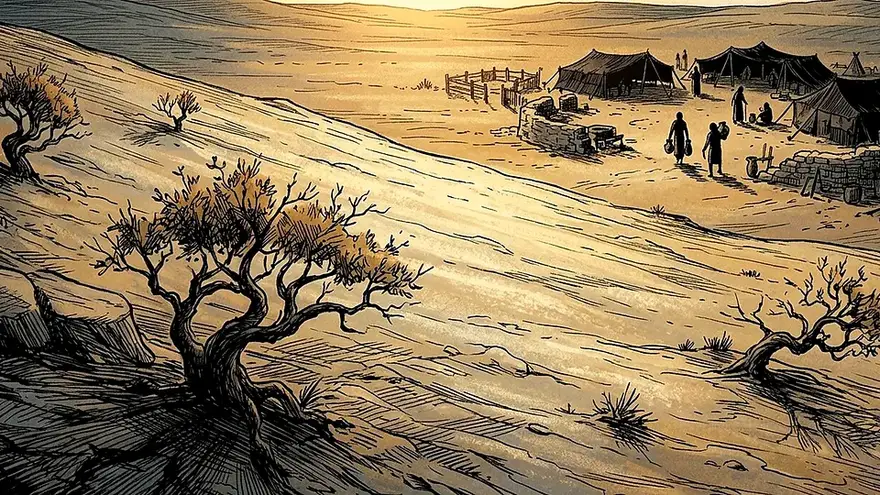
Modern readers often stumble over Numbers 22 because they mistake deadpan prophetic satire for naive folklore. Terrified of Israel camped on Moab's plains, King Balak sends bags of silver four hundred miles north to Pethor on the Euphrates to hire Bil‘am ben-Be‘or—an elite Mesopotamian baru-diviner whose curses were rumored to topple armies.
In Numbers 24:3–4, Balaam introduces himself with grand professional swagger as 'the man whose eye is opened (שְׁתֻם הָעַיִן), who sees the vision of the Almighty.' Numbers 22 punctures that ego before he even reaches Moab: the international master of spiritual sight can't see ten feet past his donkey's ears.
Numbers 22:22–23“And the angel of the LORD took his stand in the way as his adversary (lĕ-satan lo). Now he was riding on his donkey... and the donkey saw the angel of the LORD standing in the road, with a drawn sword in his hand.”
Why It Matters: Even the 1611 KJV translators split between text ('eyes open') and margin ('eyes shut') over the rare Hebrew participle shetum—heightening Numbers 22's satire where the famed 'open-eyed' seer cannot see the sword-drawn angel his donkey spots three times.
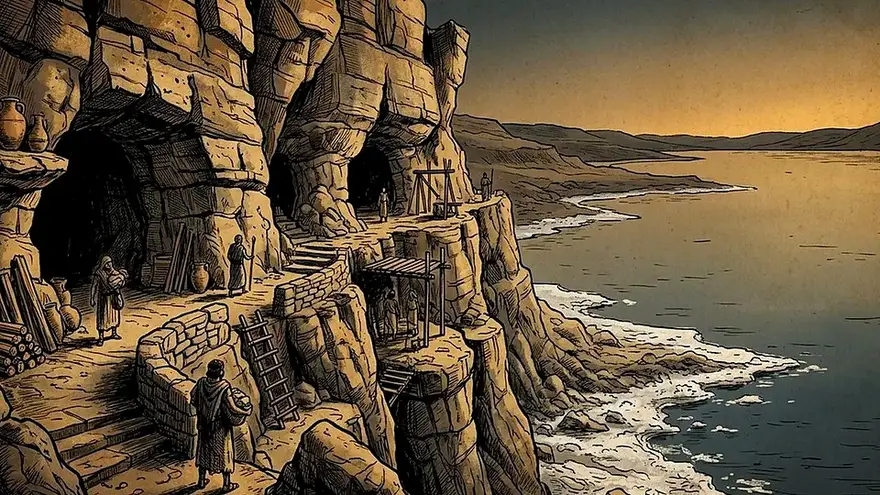
Scrolls & Archaeology: In March 1967, Dutch archaeologist Henk Franken excavated shattered lime-plaster wall fragments inked in red and black (~800–760 BCE, Jordan Archaeological Museum, Amman) at Tell Deir 'Alla near the Jabbok River, opening directly with 'The misfortunes of the Book of Balaam son of Beor, a seer of the gods.' In Rabbinic Hebrew (Mishnah Avodah Zarah 5:3), the verb shatam describes boring open a clay seal on a wine amphora, confirming Numbers 24:3 means 'unsealed eye.'
Three narrowing traps and the funniest argument in the Torah
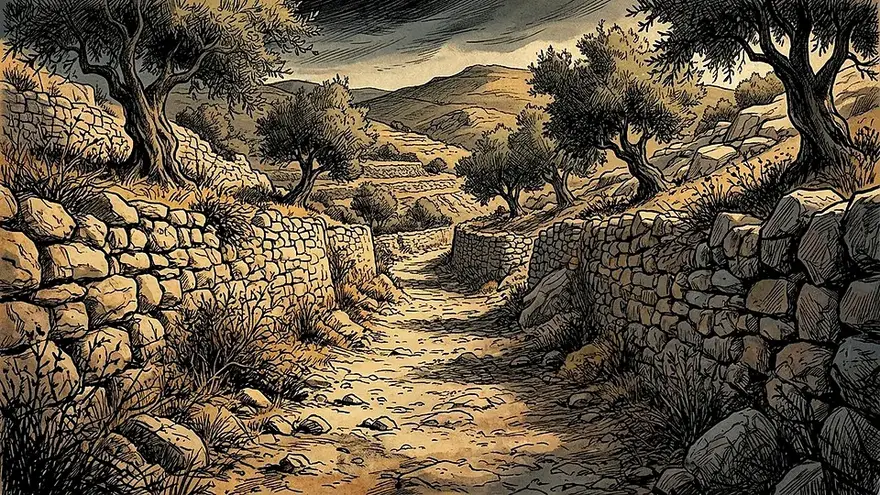
Watch the physical comedy tighten across Numbers 22:23–30 as the Angel of YHWH blocks the trail as an adversary (lĕ-satan—one of Scripture's earliest uses of satan, meaning 'roadblock'). First, the female donkey (אָתוֹן, ’aton) swerves into an open field; second, she crushes Balaam's foot against a vineyard wall; third, trapped in an alley with nowhere to turn, she lies down flat beneath him.
Three times blind Balaam thrashes the animal who just saved his life. Then verse 28 lands the punchline: 'The LORD opened the mouth of the donkey'—and enraged Balaam argues back with her without blinking until YHWH finally uncovers the seer's eyes (v.31)!
Numbers 22:28–29“Then the LORD opened the mouth of the donkey, and she said to Balaam, 'What have I done to you, that you have struck me these three times?' And Balaam said to the donkey, 'Because you have made a fool of me!'”
March 1967 in Jordan: 'Balaam son of Beor' in red and black ink
Was Balaam merely an Israelite literary invention? In March 1967, Dutch archaeologist Henk Franken's team digging an earthquake-shattered sanctuary (dated c. 840–760 BCE) at Tell Deir ‘Alla in the eastern Jordan Valley uncovered 119 fragments of white lime plaster covered in professional Aramaic-Canaanite calligraphy.
To highlight the title, the ancient scribe switched from black ink to bright red ink across the top border: 'Warnings from the Book of Balaam son of Beor (בלעם בר בער); he was a seer of the gods (אש חזה אלהן).' Inside the non-biblical text, the gods (called Shaddayin—matching Numbers 24:4's Shaddai!) visit Balaam at night with an eerie vision of cosmic darkness.
Deir ‘Alla Plaster Inscription (Combination I, Line 1 · c. 800 BCE)“'The account of [Balaam, son of Be]or, who was a seer of the gods. The gods came to him at night, and he saw a vision according to the oracle of El.'”
Why turning Moab's own prophet into Israel's witness packed such force
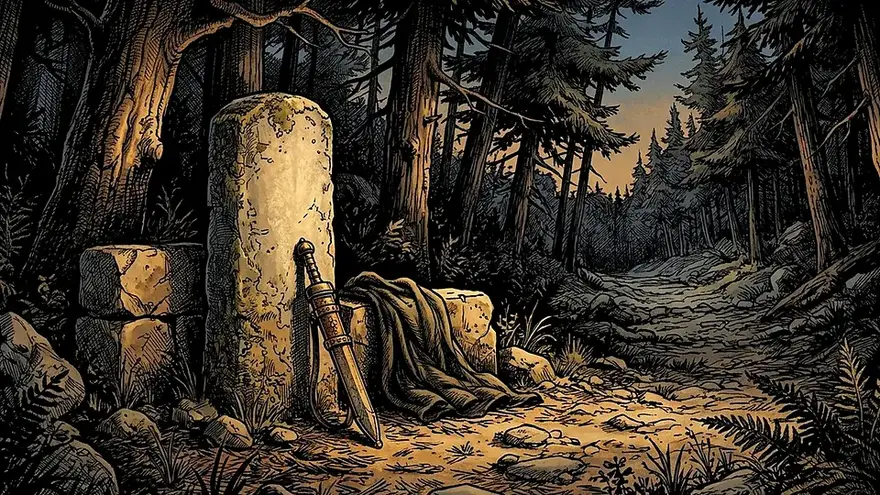
Now imagine how Numbers 22–24 sounded to ancient Transjordanian neighbors who revered Balaam son of Beor on their own temple walls! By spotlighting the donkey on the road first, the Torah establishes one unmistakable premise: the God of Israel controls every tongue on earth.
If YHWH can make a mute pack animal speak sensible Hebrew, He can effortlessly hijack the mouth of Mesopotamia's costliest curse-merchant on Moab's heights—turning three paid hexes into dazzling blessings (Numbers 23–24, culminating in the 'Star out of Jacob' in 24:17), even though greedy Balaam later schemed behind the scenes to corrupt Israel at Peor (Numbers 31:16).
Numbers 23:11–12 & 2 Peter 2:16“Num 23:11–12 — 'What have you done to me? I took you to curse my enemies, and behold, you have done nothing but bless them.' · 2 Pet 2:16 — 'A speechless donkey spoke with human voice and restrained the prophet's madness.'”
6 Real Digs That Changed How We Read the Bible
Step from 1300 BCE clay tablets to Dead Sea caves and first-century Jerusalem stones.
Hidden in desert jars for 2,000 years, Scroll 4QDeutʲ preserves the oldest reading of Deuteronomy 32:8 ('sons of God'), and 11 Aramaic scrolls of 1 Enoch show why Jude and Peter knew the story of the Watchers.
Biblical Balaam (Numbers 22–24) vs. the 1967 Deir ‘Alla Plaster Text
Comparing the Torah's portrait with the 8th-century BCE Jordanian archaeological discovery.
| Feature | Numbers 22–24 (Hebrew Torah) | Tell Deir ‘Alla Inscription (Jordan) |
|---|---|---|
| Exact Name & Patronage | Bil‘am ben-Be‘or ('Balaam son of Beor') | Bil‘am bar-Be‘or ('Balaam son of Beor,' in red ink) |
| How Divine Messages Arrive | God comes to Balaam at night (Num 22:8–9, 20) | The gods come to Balaam at night in a vision |
| Divine Title Used | Receives visions of ’El and Shaddai ('the Almighty,' Num 24:4) | Beholds the council of ’El and the Shaddayin gods |
| Portrayal of Balaam | Satirized via his donkey, forced by YHWH to bless Israel, later slain after Peor | Revered local Transjordanian sage warning his people of coming judgment |
What to Remember
- Numbers 22 is deadpan Hebrew prophetic satire: Moab's high-priced 'man whose eye is opened' gets out-seen and out-argued by his own pack donkey.
- In March 1967 at Tell Deir ‘Alla in Jordan, archaeologists uncovered an 8th-century BCE red-and-black ink plaster inscription opening: 'Book of Balaam son of Beor, a seer of the gods.'
- Just as God put human speech into a mute donkey's mouth, God commandeered Moab's superstar pagan curse-specialist to speak four soaring blessings over Israel.