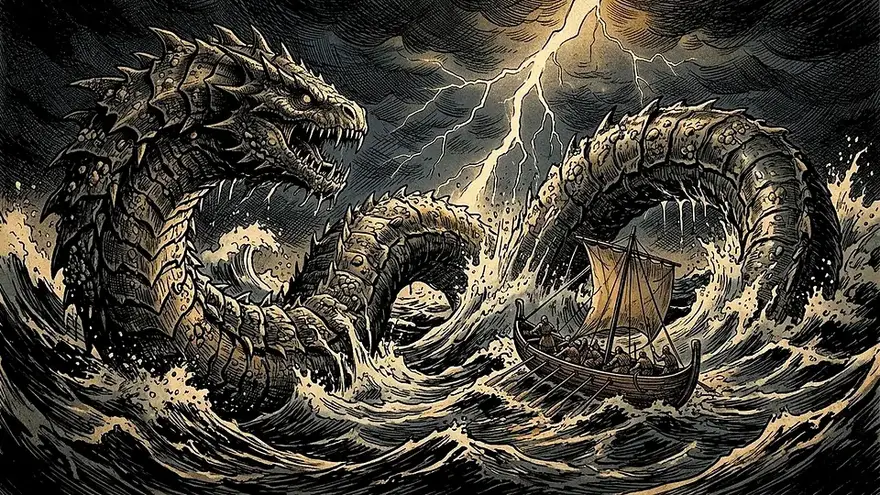
The English word 'dinosaur' could not appear in classical Bibles because anatomist Sir Richard Owen coined it in 1842—231 years after the 1611 King James Version. As for Hebrew tannin (תַּנִּין, rendered 'whales' or 'dragons' in the KJV), Scripture uses it for crocodiles, cobras (Exodus 7:9), whales, and feared Canaanite sea-serpents (tunnanu)—not Mesozoic land dinosaurs.
Why 'dinosaur' couldn't appear in 1611: Sir Richard Owen's 1842 coinage
Curious readers often ask why the 1611 King James Bible names lions, eagles, and 'dragons,' yet never once prints the word dinosaur. Simple calendar history answers that first part immediately: British anatomist Sir Richard Owen didn't coin Dinosauria (Greek deinos = 'fearfully great' + sauros = 'lizard') until April 1842—231 years after the KJV went to press!
Because 'dinosaur' didn't exist in Hebrew, Greek, or 17th-century English, popular tracts sometimes claim the Hebrew noun tannin (תַּנִּין—rendered 'whales' in KJV Genesis 1:21 and 'dragons' over twenty times elsewhere) was ancient Israel's umbrella word for Tyrannosaurus and sauropods. Testing every biblical occurrence shows what tannin actually meant.
Genesis 1:21 (1611 KJV vs. ESV)“1611 KJV — 'And God created great whales [ha-tanninim ha-gedolim]...' · ESV — 'So God created the great sea creatures...'”
Why It Matters: KJV split one Hebrew word (tannin) across 'whales,' 'serpents,' and 'dragons'; inside ancient Israel's world it encompassed Nile crocodiles, Egyptian cobras, giant marine animals, and Canaanite sea-monsters—never Jurassic land dinosaurs.
Scrolls & Archaeology: Notice a subtle lexical upgrade between Exodus 4:3 (at the desert bush, Moses's staff becomes an ordinary desert snake, nachash) and Exodus 7:9–10 (inside Pharaoh's court, Aaron's staff becomes a tannin—evoking Egypt's royal uraeus cobra and Nile crocodile). In Genesis 1:21, the author reserves the high theological verb bara ('created effortlessly') specifically for ha-tanninim ha-gedolim to counter Babylonian Enuma Elish and Ugaritic tunnanu myths (KTU 1.3 III 40), where gods had to wage war against primordial sea-dragons.
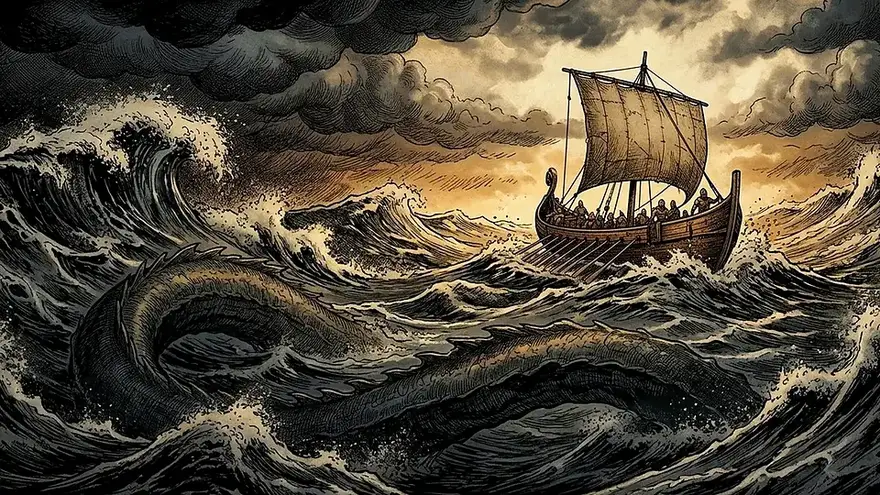
Aaron's staff in Exodus 7:9–10: nahash in the desert, tannin before Pharaoh
Watch a revealing word swap inside Exodus. When God first turns Moses's shepherd staff into a snake beside the burning bush in Exodus 4:3, the narrator uses the standard Hebrew word for an ordinary desert snake: nahash (נָחָשׁ).
Yet when Moses and Aaron step onto Pharaoh's palace floor in Exodus 7:9–10 and Aaron casts down his rod before Egypt's magicians, the Hebrew switches words: Aaron's staff becomes a tannin! It did not morph into a 40-foot Brachiosaurus indoors—it became either an Egyptian hooded cobra (the royal emblem on Pharaoh's crown) or a Nile crocodile, the exact beast Ezekiel 29:3 calls Pharaoh ('the great tannin lying in his streams').
Exodus 7:10 & Ezekiel 29:3“Exod 7:10 — 'Aaron cast down his staff before Pharaoh and his servants, and it became a serpent [tannin].' · Ezek 29:3 — 'Behold, I am against you, Pharaoh king of Egypt, the great dragon [ha-tannin ha-gadol] that lies in the midst of his streams.'”
Ugaritic tunnanu tablets and Genesis 1:21's quiet theological mic-drop
Notice an extraordinary detail in Genesis 1: across all six days of Creation, the narrator lists broad families ('livestock,' 'winged birds,' 'creeping things')—singling out only one specific creature on Day Five: 'God created the great sea monsters (ha-tanninim ha-gedolim, הַתַּנִּינִם הַגְּדֹלִים)' (Genesis 1:21). Why name tanninim alone?
Cuneiform tablets excavated in 1929 at Ugarit in Syria (~13th century BCE) uncovered the exact Canaanite cognate: tunnanu (KTU 1.3 III.40), a terrifying chaos sea-serpent pagan gods fought in cosmic war to establish creation! Genesis 1:21 delivers a serene counter-punch: dreaded sea-dragons aren't rival gods YHWH battled—He effortlessly formed (bara) them on Day Five and told them to go multiply.
Psalm 74:13 & Isaiah 27:1“Ps 74:13 — 'You divided the sea by your might; you broke the heads of the sea monsters [tanninim] on the waters.' · Isa 27:1 — 'He will slay the dragon [ha-tannin] that is in the sea.'”
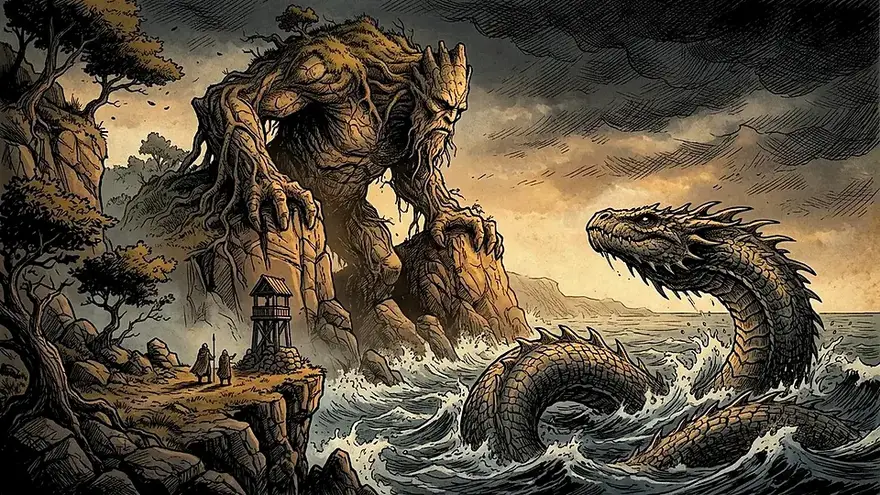
What about Behemoth in Job 40—sauropod or mythic super-beast?
Once tannin turns out to denote whales, crocodiles, cobras, and Canaanite sea-serpents rather than terrestrial dinosaurs, readers always ask about Behemoth in Job 40:15–24, who 'makes his tail stiff like a cedar.' Young-earth writers picture a sauropod dinosaur; Hebrew philologists note yachpotz ('bends/sways' like cedar boughs) alongside pachadaw ('sinews of his thighs/testicles,' 40:17) and hiding under Jordan lotus reeds (40:21–23).
Paired with fire-breathing, multi-headed Leviathan (Job 41:19–21; Psalm 74:14), Job 40–41 elevates colossal Nile/Levantine beasts (hippopotamus/wild bull and crocodile) into cosmic chaos-icons no mortal can tame—declaring YHWH effortless Lord over the fiercest forces on land and sea.
Job 40:15, 17“Behold, Behemoth, which I made as I made you; he eats grass like an ox... He makes his tail stiff like a cedar; the sinews of his thighs are knit together.”
Every Way Biblical Hebrew Uses 'Tannin' (תַּנִּין)
Note: KJV desert 'dragons' in Malachi 1:3 and Micah 1:8 actually translate a separate plural noun—tannim (תַּנִּים, desert jackals)!
| Passage | Context Clue | 1611 KJV Rendering | Modern Translation & Referent |
|---|---|---|---|
| Genesis 1:21; Psalm 148:7 | Created to swarm in deep ocean waters on Day Five | 'Great whales' / 'dragons' | 'Great sea creatures' (whales, sharks, demythologized tunnanu) |
| Exodus 7:9–12; Psalm 91:13 | Aaron's wooden staff thrown down inside Pharaoh's court | 'Serpent' / 'dragon' | 'Serpent / cobra' (Egyptian royal cobra or crocodile) |
| Ezekiel 29:3; 32:2 | Lies in Nile channels with scales & fish stuck to its hide | 'The great dragon' | 'The great crocodile / monster' symbolizing Pharaoh |
| Psalm 74:13; Isaiah 27:1; 51:9 | Paired with Leviathan & Rahab in cosmic sea-victory poetry | 'Dragons' in the waters | 'Sea monsters / chaos dragon' (Canaanite tunnanu imagery) |
| Micah 1:8; Job 30:29 (tannim!) | Howling mournfully in dry wilderness ruins alongside ostriches | 'Dragons' (mistaking tannim for tannin) | 'Jackals' (separate Hebrew root tan, desert canine) |
What to Remember
- Sir Richard Owen invented the word 'dinosaur' in 1842, over two centuries after the 1611 King James Bible rendered Hebrew tannin as 'whales' and 'dragons.'
- In Exodus 7:9–10, Aaron's staff turns into a tannin inside Pharaoh's court (vs. nahash in Exodus 4:3), proving tannin includes cobras and Nile crocodiles.
- Genesis 1:21 singles out ha-tanninim ha-gedolim to demote feared Canaanite chaos monsters (Ugaritic tunnanu) into ordinary creatures God made on Day Five.