Neither 17th-century 'hippo and crocodile' footnotes nor modern dinosaur theories explain why Job 41's Leviathan breathes literal flames, boils the abyss, and has multiple heads in Psalm 74:14. Clay tablets unearthed at Ugarit (Syria) in 1929 solved the mystery: ancient Near Eastern poetry knew 'Lotan, the twisting seven-headed sea serpent' of cosmic chaos—which Job and Psalm 104 show effortlessly tamed under YHWH's hand.
Why hippos, crocodiles, and dinosaurs all clash with the Hebrew text
In 1663, French scholar Samuel Bochart popularized the footnote that Behemoth was a hippo and Leviathan a Nile crocodile. Yet hippos have tiny twig-tails (not 'like a cedar' in Job 40:17), and crocodiles don't sneeze light or breathe fire!
Dinosaur readings hit the exact same wall: no sauropod or marine reptile breathes burning torches (Job 41:19), sports multiple heads (Psalm 74:14), or awaits judgment at the end of time (Isaiah 27:1).
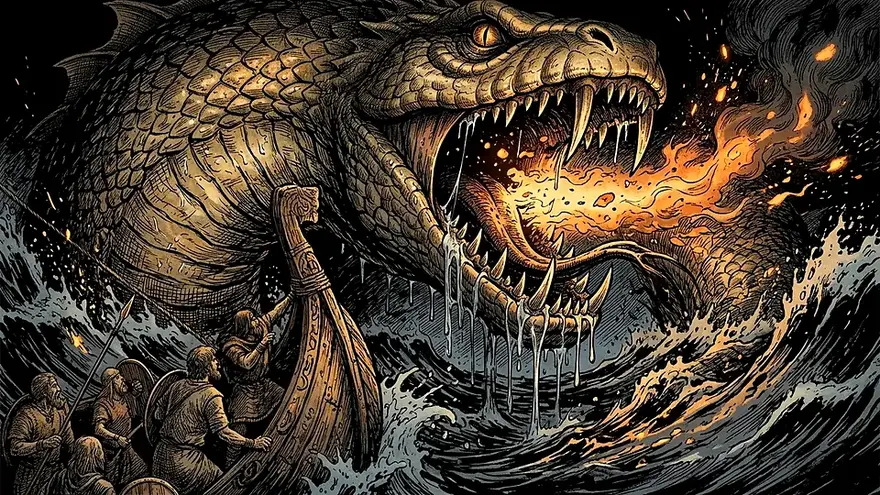
Job 41:19–21“Out of his mouth go flaming torches; sparks of fire leap forth. Out of his nostrils comes forth smoke... His breath kindles coals, and a flame comes forth from his mouth.”
Why It Matters: French scholar Samuel Bochart popularized 'hippopotamus and crocodile' footnotes in 1663 before Mesopotamia and Syria were excavated—failing to explain why Leviathan breathes literal fire in Job 41:19–21 and has multiple crushed heads in Psalm 74:14.
Scrolls & Archaeology: In 1929, French archaeologists led by Claude Schaeffer unearthed 13th-century BCE clay tablets at Ras Shamra (ancient Ugarit on Syria's coast), including Baal Cycle tablet KTU 1.5 I 1–3 praising Baal for smiting 'Lotan, the fleeing serpent (btn brḥ), the twisting serpent (btn 'qltn), the potentate with seven heads.' Isaiah 27:1 reproduces those exact two rare Northwest Semitic adjectives word-for-word while attributing effortless mastery over cosmic chaos exclusively to YHWH.
Behemoth ('Super-Beast') & Leviathan ('The Coiled One') in Job 40–41
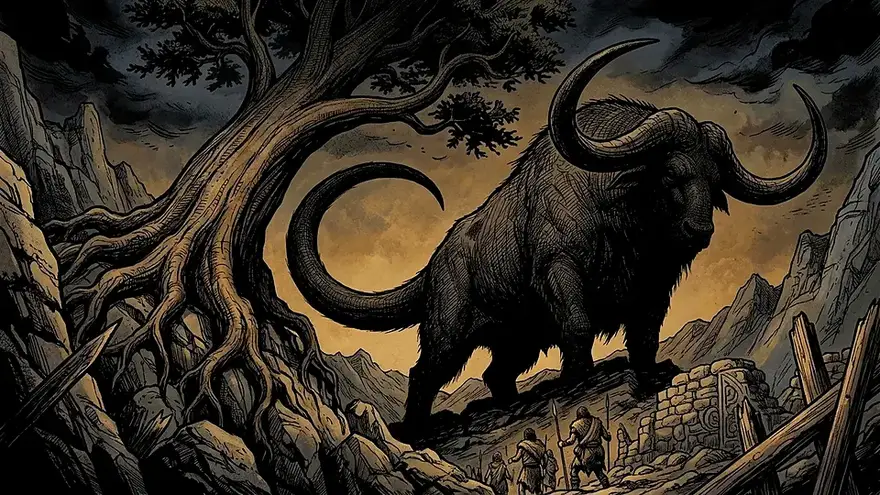
In Hebrew grammar, Behemoth is an intensive plural of majesty of behemah ('beast')—meaning the ultimate 'Arch-Beast' of the land, framed with bronze-tube bones and iron-bar limbs.
Then Job 41 unveils his counterpart in the abyss: Leviathan, armored in sealed shield-scales that snap iron harpoons like dry straw, churning the deep ocean like a boiling pot.
Job 40:15, 18–19“Behold, Behemoth, which I made as I made you... His bones are tubes of bronze, his limbs like bars of iron. He is the first of the works of God.”
The 1929 Ras Shamra discovery: 'Lotan' with seven heads
In spring 1929, a farmer's plow on the Syrian coast at Ras Shamra (ancient Ugarit) struck a 3,200-year-old library of cuneiform tablets.
Scholars froze when they translated Baal Cycle tablet KTU 1.5: it named 'Lotan (ltn), the fleeing serpent, the twisting serpent, the potentate with seven heads'—the exact same two rare adjectives Isaiah 27:1 uses word-for-word for Leviathan!
Psalm 74:13–14 & Isaiah 27:1“Psalm 74:14 — 'You crushed the heads of Leviathan.' · Isaiah 27:1 — 'The LORD will punish Leviathan the fleeing serpent, Leviathan the twisting serpent.'”
Canaan's terrifying chaos monster becomes God's bathtub toy
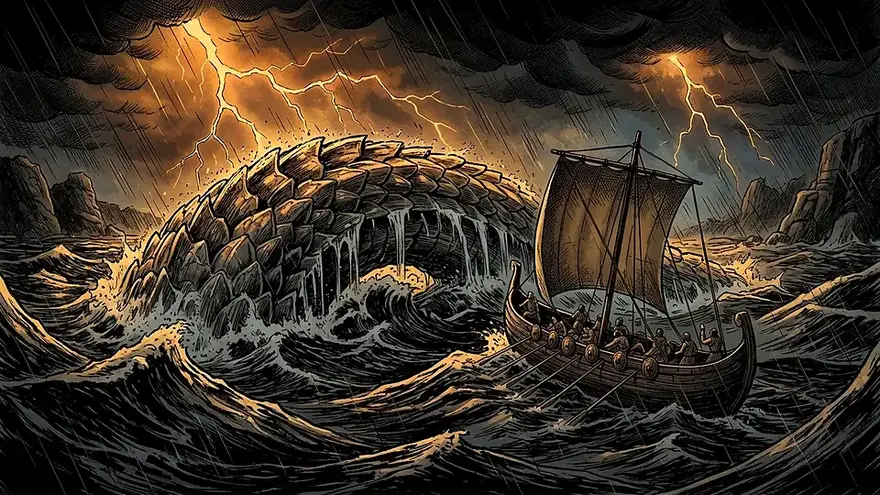
In Canaanite and Babylonian myth, storm-gods barely survived bloody wars against seven-headed sea chaos. Watch how Israel's poets flip that myth upside down: in Psalm 104:26, terrifying Leviathan is just a creature God 'formed to play in the sea'!
And at the climax of Job, God shows suffering Job that creation holds wild, unmasterable chaos no human can hook—yet God holds its leash with ease.
Psalm 104:25–26“Here is the sea, great and wide... There go the ships, and Leviathan, which you formed to play in it.”
6 Real Digs That Changed How We Read the Bible
Step from 1300 BCE clay tablets to Dead Sea caves and first-century Jerusalem stones.
Hidden in desert jars for 2,000 years, Scroll 4QDeutʲ preserves the oldest reading of Deuteronomy 32:8 ('sons of God'), and 11 Aramaic scrolls of 1 Enoch show why Jude and Peter knew the story of the Watchers.
Testing All Three Theories Against Every Biblical Clue
Why ancient Near Eastern chaos-poetry unlocks details natural animals can't.
| Textual Clue | Hippo & Crocodile (1663) | Dinosaurs / Marine Reptiles | Ancient Chaos Beasts (Ugarit KTU 1.5) |
|---|---|---|---|
| Tail stiff like a cedar (Job 40:17) | Fails (hippo has tiny twig tail) | Fits sauropod tail | Fits primeval 'Super-Beast' |
| Breathes literal fire & coals (Job 41:19–21) | Fails | Fails (no reptile breathed fire) | Matches mythic chaos dragon imagery |
| Multiple crushed heads (Psalm 74:14) | Fails | Fails | Exact match: 7-headed Lotan at Ugarit |
| Slain at end of history (Isaiah 27:1) | Fails | Fails | Exact word-for-word adjectives from Baal Cycle |
What to Remember
- Why hippos, crocodiles, and dinosaurs all clash with the Hebrew text (Job 41:19–21).
- Behemoth ('Super-Beast') & Leviathan ('The Coiled One') in Job 40–41 (Job 40:15, 18–19).
- The 1929 Ras Shamra discovery: 'Lotan' with seven heads (Psalm 74:13–14 & Isaiah 27:1).