The viral internet meme of 'biblically accurate angels' mixes four distinct heavenly categories that the Bible itself keeps separate. In Hebrew (mal'akh) and Greek (angelos), the word 'angel' literally means 'messenger,' and whenever messengers visit humans in Scripture (Genesis 18–19, Judges 13, Tobit 5, Luke 24), they appear as ordinary wingless men. The awe-inspiring multi-winged beings—six-winged fiery Seraphim (Isaiah 6), four-faced throne-bearing Cherubim (Ezekiel 1 & 10), and eye-covered interlocking wheels called Ophanim (Ezekiel 1:15–18)—are never called 'angels' in those chapters; they are heavenly temple guardians surrounding God's throne.
Surprise: Biblical 'angel' messengers never have bird wings
Both Hebrew mal'akh and Greek angelos simply mean 'messenger.' When messengers walk up to Abraham's tent (Genesis 18), stay at Lot's house (Genesis 19), or talk to Samson's parents (Judges 13), people mistake them for ordinary human travelers.
Humans didn't paint whiteswan wings onto angel messengers until the 4th century CE, borrowing visual shorthand from winged Roman Victory statues.
Hebrews 13:2“Do not neglect to show hospitality to strangers, for thereby some have entertained angels unawares.”
Why It Matters: KJV added an English '-s' onto Hebrew plural seraphim ('seraphims') and translated Ezekiel's chariot wheel-felloes (gabbot) as 'rings,' while neither chapter ever applies the Hebrew noun mal'akh ('angel/messenger') to these throne guardians.
Scrolls & Archaeology: In Numbers 21:6 and Isaiah 14:29, the exact same Hebrew noun śārāp denotes a venomous fiery cobra—a direct match to 8th-century BCE Judean stone scaraboid seals unearthed in Jerusalem and Lachish depicting four-winged and two-winged royal uraeus cobras flanking sovereign names. Conversely, Ugaritic diplomatic tablets use cognates of mal'akh (mlakm) strictly for traveling envoys bearing verbatim royal speeches.
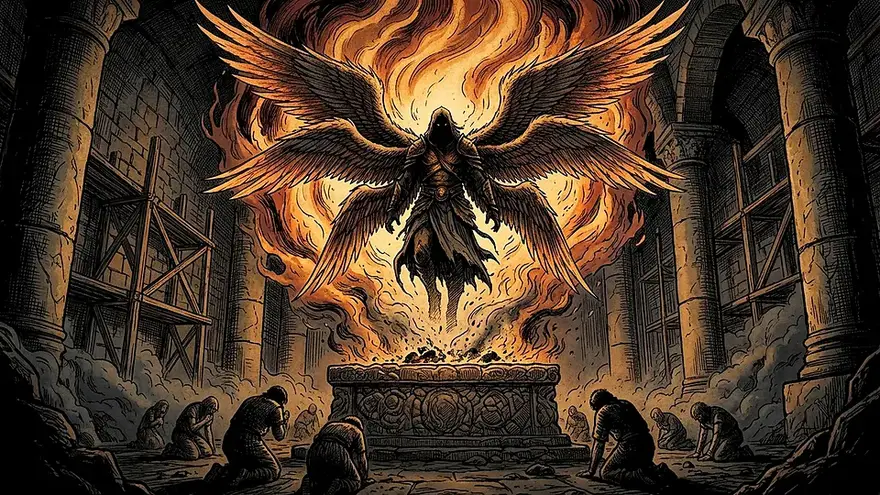
Seraphim: Six-winged 'Burning Ones' in Isaiah 6
In Isaiah 6, the prophet sees towering six-winged beings calling 'Holy, holy, holy' through temple smoke. Notice Isaiah never calls them mal'akhim—he calls them Seraphim ('Burning Ones').
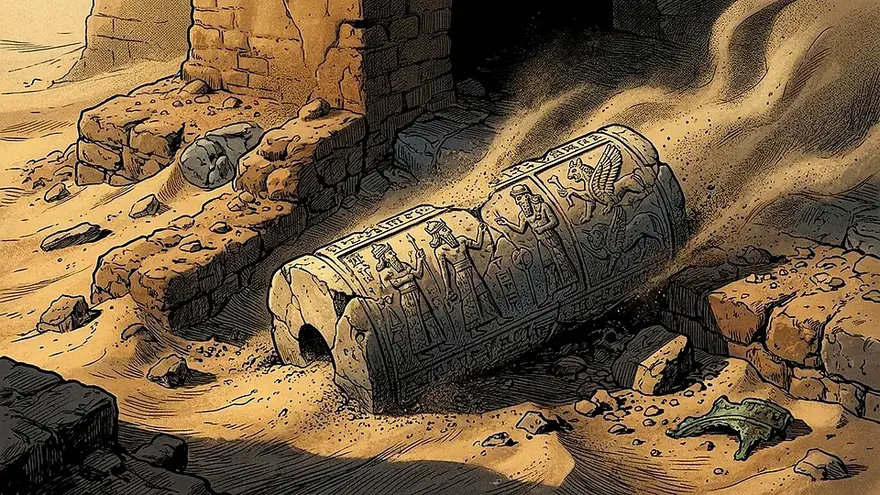
Elsewhere in Hebrew (Numbers 21:6), saraph is the exact word for fiery venomous serpents, matching 8th-century BCE royal seals unearthed in Judah showing winged cobras guarding the king's name.
Isaiah 6:2“Above him stood the seraphim. Each had six wings: with two he covered his face, and with two he covered his feet, and with two he flew.”
Four-faced Cherubim & eye-covered Wheels (Ophanim) in Ezekiel
Forget chubby Renaissance Valentine babies: biblical Cherubim were fierce hybrid throne-guardians (echoing Babylonian winged bull-lion lamassu statues) with four faces—human, lion, ox, and eagle—stationed at Eden's gate and above the Ark.
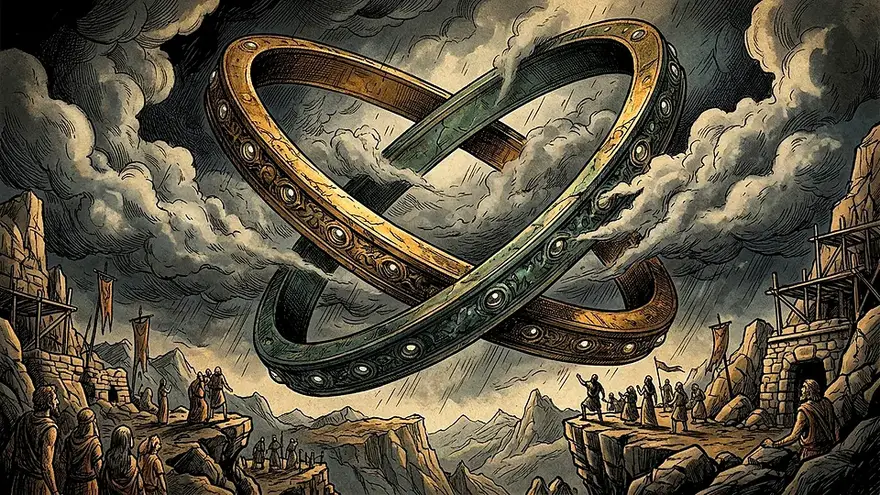
Beside them in Ezekiel 1 spin giant intersecting chariot wheels covered in eyes (Ophanim), proclaiming to exiled Jews in Babylon that God's throne wasn't trapped in Jerusalem's rubble—it had wheels.
Ezekiel 10:12, 14“Their whole body, their rims, and their spokes were full of eyes all around... each one had four faces: cherub, human, lion, and eagle.”
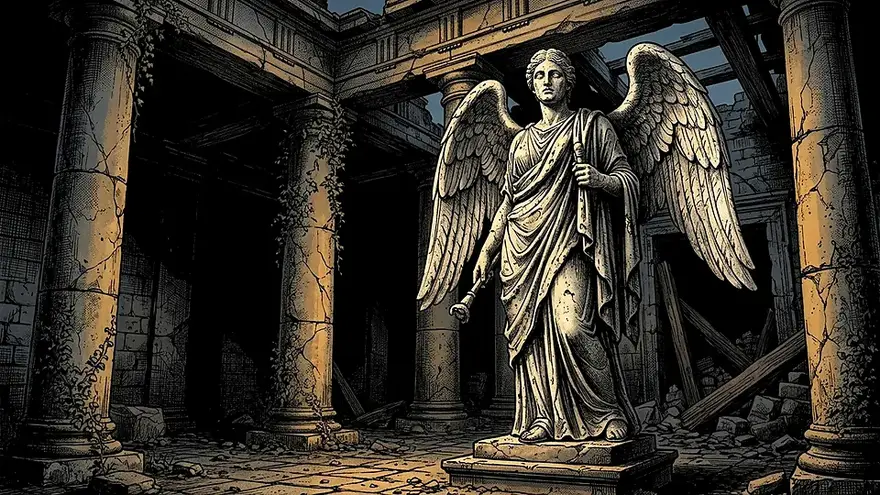
Why the only two named angels in Protestant Bibles look human
Count how many heavenly beings actually receive personal names inside the 66-book Protestant canon: just two—Gabriel and Michael (with Raphael added in Catholic/Orthodox Tobit).
When Gabriel speaks to Daniel in Daniel 8:15 and 9:21, the text explicitly describes him as having 'the appearance of a man,' not a spinning wheel of eyes.
Daniel 8:15“When I, Daniel, had seen the vision, I sought to understand it. And behold, there stood before me one having the appearance of a man.”
Why “Biblically Accurate Angels” Memes Mix Up 4 Different Beings
In Hebrew, only human-looking messengers are called “angels” (mal’akhim)—the winged & wheel-shaped beings are heaven’s throne guardians!
Mal’akh (“Messenger”)
Every actual 'angel' who walks up to people in the Bible looks like an ordinary traveler with zero wings.
Seraphim (“Burning Ones”)
Blazing throne attendants around God’s temple—covering face and feet while singing “Holy, holy, holy.”
Cherubim (Sphinx Guardians)
Not chubby Valentine babies! Mighty four-faced guardians (human, lion, ox, eagle) stationed at Eden and the Ark.
Ophanim (“The Wheels”)
Glowing gemstone chariot wheels covered in eyes—carrying God’s throne right out to exiled captives in Babylon.
Four Heavenly Beings Modern Art Blends Together
In Hebrew, 'angel' (mal'akh) is a job description, not a catch-all species.
| Biblical Term | Literal Meaning | Biblical Appearance | Primary Role |
|---|---|---|---|
| Mal'akh / Angelos | Messenger / Envoy | Ordinary wingless human men | Delivering messages on earth (Gen 18, Luke 24) |
| Seraphim | Burning / Fiery Ones | Six wings, fiery presence | Purifying praise around YHWH's throne (Isa 6) |
| Cherubim | Throne Guardians | Four faces (man, lion, ox, eagle), 4 wings | Guarding sacred space & Eden's gate (Ezek 1, 10) |
| Ophanim | Wheels | Intersecting beryl wheels full of eyes | Bearing God's mobile chariot-throne (Ezek 1) |
What to Remember
- Not a single mal'akh ('messenger') in the Old or New Testament is ever described as having bird wings; winged human messengers entered Christian art in the 4th century CE via Roman Victoria/Nike iconography.
- Hebrew saraph ('burning/venomous one') is the exact word used in Numbers 21:6 and Isaiah 14:29 for fiery serpents, matching 8th-century BCE Judahite royal seals depicting winged cobras.
- Ezekiel's four-faced Cherubim (human, lion, ox, eagle) directly subvert the winged bull/lion throne guardians (karibu / lamassu) Ezekiel saw in Babylonian exile, showing YHWH's throne moving on wheels beyond Jerusalem.