Modern Bibles did not erase Satan's name from Isaiah 14:12; 'Lucifer' is not Hebrew at all, but Latin for 'light-bringer / morning star.' Isaiah 14:4 explicitly titles the poem a taunt against the human king of Babylon, calling him Helel ben-Shachar (הֵילֵל בֶּן־שָׁחַר, 'Shining One, son of Dawn'), which Jerome's 400 CE Latin Vulgate rendered lowercase lucifer.
Read eight verses earlier: Isaiah 14:4 names the target explicitly
Viral social-media posts regularly accuse modern translations like the ESV, NIV, and NASB of a sinister plot to delete 'Lucifer' from Isaiah 14:12 and swap in 'morning star'—a title Jesus claims in Revelation 22:16. Before chasing conspiracy theories, read eight verses higher on the page: Isaiah 14:4 titles the whole poem 'this taunt against the king of Babylon.'
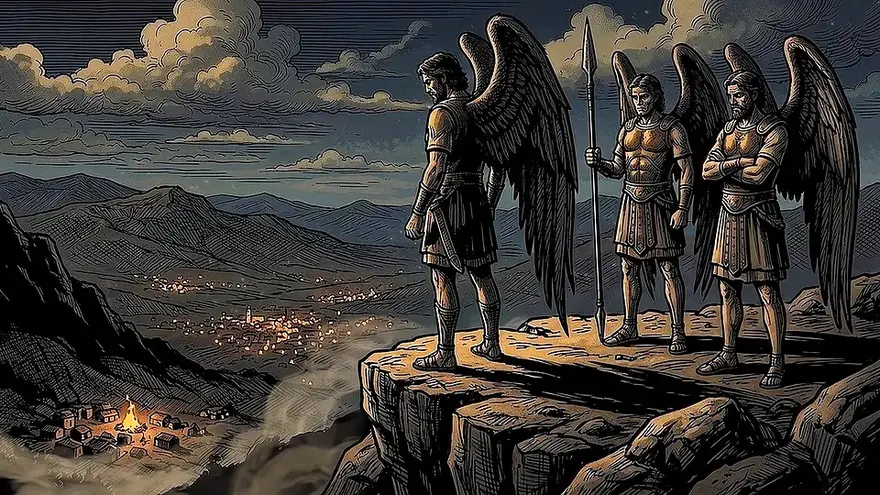
Verses 16–20 depict a defeated human monarch whose corpse lies unburied among slain soldiers while onlookers stare and ask, 'Is this the man (ha-ish) who made the earth tremble, who shook kingdoms?' Historically, Isaiah mocks an arrogant Mesopotamian emperor crashing into maggot-covered Sheol.
Isaiah 14:4, 16“You will take up this taunt against the king of Babylon... Those who see you will stare at you and ponder over you: 'Is this the man who made the earth tremble, who shook kingdoms?'”
Why It Matters: Jerome's 400 CE Latin Vulgate used lowercase lucifer ('light-bringer') for Venus—the exact same Latin noun he used for Christ in 2 Peter 1:19; 1611 translators capitalized it like a personal name inside a poem explicitly titled against Babylon's human king (Isaiah 14:4).
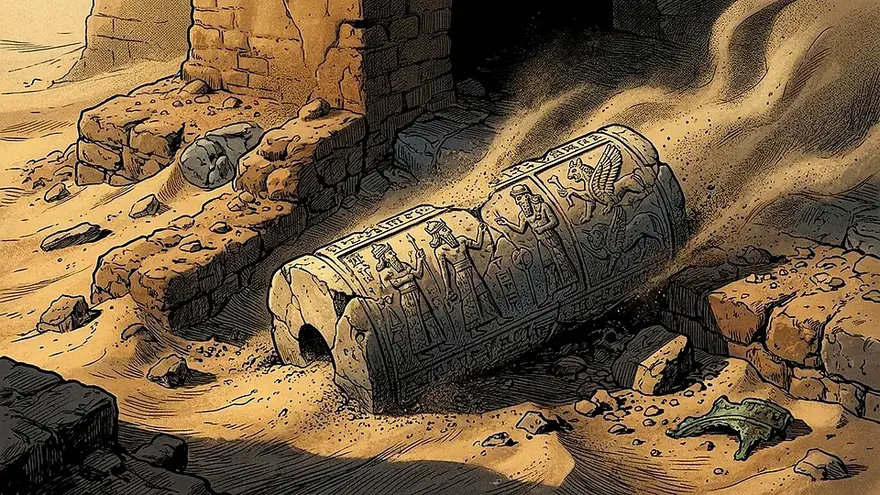
Scrolls & Archaeology: Late Bronze Age clay tablets from Ugarit (KTU 1.6 I 54–65 and KTU 1.23) preserve the Canaanite astral myth mocked by Isaiah: the lesser morning-star deity Athtar climbs 'the heights of Zaphon' (named verbatim in Hebrew Isaiah 14:13 as yarketei tzafon!) to seize Baal's lofty throne, only to descend in humiliation because his feet cannot reach the footstool. Even John Calvin and Martin Luther protested in the 16th century that applying 'Lucifer' in Isaiah 14:12 directly to the devil ignored the chapter's plain Babylonian context.

Hebrew Helel ben-Shachar and Canaanite morning-star myth
In Isaiah 14:12, the prophet jeers at Babylon's king with vivid sky imagery: 'How you are fallen from heaven, O Helel ben-Shachar!' (הֵילֵל בֶּן־שָׁחַר, from halal, 'to shine,' plus shachar, 'dawn'). Across the ancient Near East, the 'Shining One, son of Dawn' was the planet Venus—blazing brightly before sunrise as if climbing heaven's summit, then vanishing the moment the sun rises.
Clay tablets from Ugarit (KTU 1.6 I) preserve an unmistakable Canaanite parallel: a proud astral deity named Athtar tries to occupy Baal's throne atop Mount Zaphon (tsaphon—the exact mountain named in Isaiah 14:13!), fails to fill it, and descends to rule the underworld.
Isaiah 14:12–13“How you are fallen from heaven, O Day Star, son of Dawn [Helel ben-Shachar]! ... You said in your heart, 'I will ascend to heaven; above the stars of God I will set my throne on high; I will sit on the mount of assembly in the far reaches of the north [Zaphon].'”
Jerome's 400 CE Latin lucifer—also used for Christ in 2 Peter 1:19!
How did a Latin word land inside English Bibles? First, the Greek Septuagint (~200 BCE) translated Helel accurately as heōsphoros (ἑωσφόρος, 'dawn-bringer'). Around 400 CE, Saint Jerome translated Isaiah into Latin for the Vulgate and picked the everyday lowercase Roman word for Venus: lucifer (lux = light + ferre = bring).
In classical and early Christian Latin, lucifer had zero diabolical meaning! In 2 Peter 1:19, where Greek calls Christ's dawning glory phōsphoros ('morning star'), Jerome's Vulgate wrote et lucifer oriatur in cordibus vestris—'until lucifer rises in your hearts'! Fourth-century Christians even had an orthodox bishop named Saint Lucifer of Cagliari, and sang to Christ as true Lucifer in the Easter Exsultet.
2 Peter 1:19 (Latin Vulgate vs. English)“Until the day dawns and the morning star [Latin Vulgate: lucifer; Greek: phōsphoros] rises in your hearts.”
How Origen, Luke 10:18, the 1611 KJV, and Milton forged the name
Why did Western Christendom eventually hear 'Lucifer' as Satan's proper name? Third-century thinkers like Tertullian and Origen connected Jesus's saying in Luke 10:18 ('I saw Satan fall like lightning from heaven') with Isaiah 14 and Ezekiel 28, discerning dark cosmic pride energizing earthly empires like Babylon and Tyre.
When Wycliffe (1382) and the 1611 King James translators rendered Isaiah 14:12 from Latin influence, they capitalized 'O Lucifer, son of the morning' instead of translating it 'Day Star'—and John Milton's Paradise Lost (1667) cemented 'Lucifer' across English literature as Satan's rebel title. Modern Bibles simply translated Isaiah's actual Hebrew instead of keeping Jerome's Latin noun.
Luke 10:18“And he said to them, 'I saw Satan fall like lightning from heaven.'”
How Isaiah 14:12 Traveled from Hebrew to 'Lucifer'
Tracing 2,700 years of translation across Hebrew, Greek, Latin, 1611 English, and modern scholarship.
| Stage & Date | Text / Author | Exact Wording in Isaiah 14:12 | What Readers Heard |
|---|---|---|---|
| Original Hebrew (~700 BCE) | Masoretic / Dead Sea Scrolls (1QIsaᵃ) | Helel ben-Shachar (הֵילֵל בֶּן־שָׁחַר) | 'Shining One, son of Dawn' (Venus) mocking Babylon's king |
| Greek Septuagint (~200 BCE) | Alexandrian Jewish Translators | heōsphoros ho prōi anatellōn | 'Dawn-bringer that rises early' (the morning planet) |
| Latin Vulgate (~400 CE) | Saint Jerome | lucifer qui mane oriebaris | Lowercase 'morning star' (same word used in 2 Pet 1:19) |
| Early Modern English (1611–1667) | King James Bible & Milton's Paradise Lost | 'O Lucifer, son of the morning' | Heard as the personal angelic name of fallen Satan |
| Modern Translations (ESV, NIV, NASB) | Direct from Hebrew Manuscripts | 'O Day Star, son of Dawn' / 'morning star' | Restores Isaiah's Hebrew astronomy & royal-Babylon satire |
What to Remember
- Isaiah 14:4 explicitly introduces the passage as 'this taunt against the king of Babylon,' a mortal tyrant whose corpse rots unburied (14:16–19).
- Hebrew Helel ben-Shachar ('Shining One, son of Dawn' = Venus) became Latin lucifer in Jerome's Vulgate—the exact Latin word Jerome used for Christ's return in 2 Peter 1:19!
- Patristic links to Luke 10:18, 1611 KJV capitalization ('O Lucifer'), and John Milton's Paradise Lost (1667) turned a Latin astronomy noun into Satan's popular name.