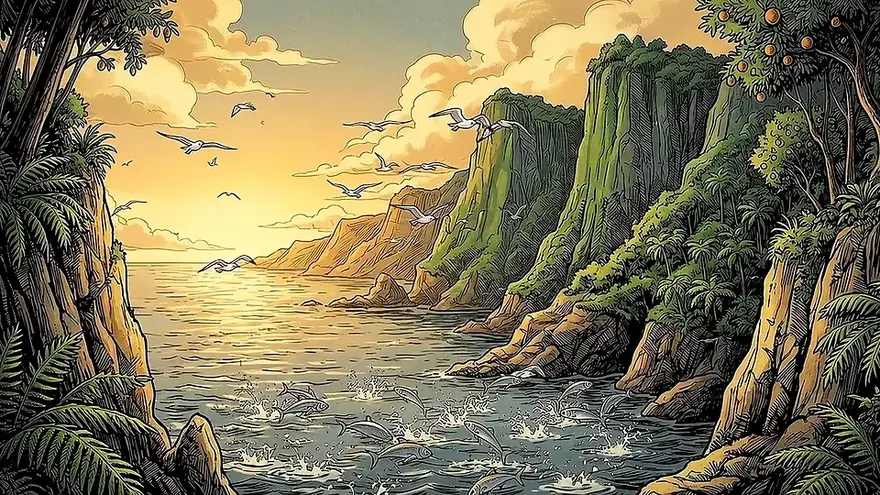
Genesis 1:1–2:3 and Genesis 2:4–25 preserve two distinct ancient Israelite creation traditions placed side by side rather than harmonized into a single timeline. In Genesis 1, a transcendent Elohim speaks order over a watery abyss (tehom) across six symmetrical days: plants (Day 3), birds and fish (Day 5), land animals (Day 6a), and male and female humanity together last (Day 6b). At Genesis 2:4b, YHWH Elohim begins with a dry, rainless desert and works hands-on like a potter: forming one man first from dust, planting a garden, forming animals and birds afterward as potential helpers, and building the first woman last.
Chapter 1 starts underwater; Chapter 2 starts in a dry desert
Open Genesis 1:2 and the earth is completely submerged under a dark, surging ocean. God creates by speaking royal commands from heaven across six structured days.
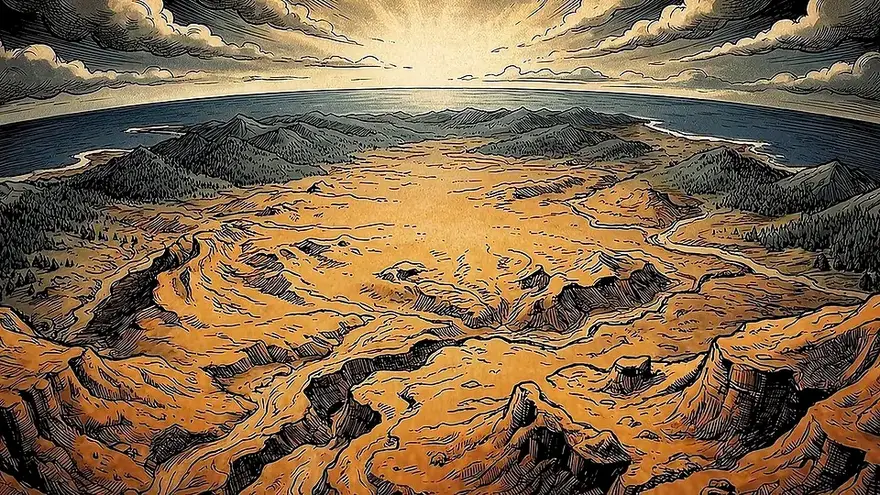
Then at Genesis 2:4, the scenery reverses. There is no ocean at all—the ground is parched and dry because rain hasn't fallen yet, and God walks on the ground forming things by hand like a potter.
Genesis 2:5“No shrub of the field had yet appeared on the earth and no plant of the field had yet sprung up, for the LORD God had not sent rain on the earth.”
Why It Matters: Because Genesis 2:7–19 forms the man BEFORE land animals and birds—reversing Genesis 1:20–27—the NIV inserts English pluperfect 'had formed,' whereas KJV, ESV, and NRSV preserve the sequential Hebrew narrative verb.
Scrolls & Archaeology: In classical Biblical Hebrew prose, a clause-initial wayyiqtol verb (wayyitzer) continues the chronological action chain rather than expressing a flashback, which normally places the subject before a qatal verb (as in Genesis 2:8b or 3:1). Ancient scribes noticed the exact same sequence tension: both the Samaritan Pentateuch and the Greek Septuagint inserted the adverb 'still/further' (eti) in Genesis 2:19 to harmonize Chapter 2 with Chapter 1.
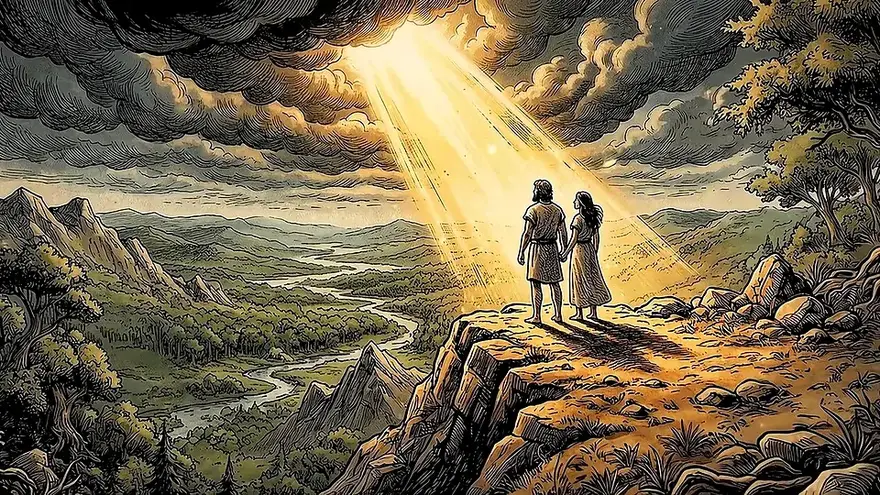
Every step of the creation order flips
In Genesis 1, green plants come first (Day 3), then birds and fish (Day 5), then land animals (Day 6), and finally male and female humans together at the very end.
In Genesis 2, God forms one man first from dry dust—before any garden trees grow. Next comes Eden's trees, then land animals and birds as potential companions, and finally the first woman last of all.
Genesis 1:27 vs. Genesis 2:7, 22“Genesis 1:27 — 'Male and female he created them.' · Genesis 2:7 — 'The LORD God formed the man of dust... then made a woman from the rib.'”
Why some English Bibles quietly added the word 'had'
If you open the NIV at Genesis 2:19, it reads 'Now the LORD God had formed all the wild animals'—making it sound like a flashback to Chapter 1.
In the original Hebrew, however, the verb is standard sequential action (wayyitzer: 'And the LORD God formed'), identical to every other next-step verb in the chapter. Translators like the KJV, ESV, and NRSV leave it in sequence.
Genesis 2:18–19 (ESV)“Then the LORD God said, 'It is not good that the man should be alone...' Now out of the ground the LORD God formed every beast of the field.”
Why ancient editors kept both side by side
Even God's name changes between the two chapters: Genesis 1 uses only Elohim ('God'), while Genesis 2 switches to YHWH Elohim ('the LORD God').
Ancient scribes didn't miss the difference—they refused to erase either sacred portrait. Together, Chapter 1 shows the sovereign Architect of the cosmos, while Chapter 2 shows an intimate Creator kneeling in human dust.
Genesis 2:4“These are the generations of the heavens and the earth when they were created, in the day that the LORD God made the earth and the heavens.”
Genesis 1 vs. Genesis 2: Watch the Creation Order Flip
Read the first two chapters of the Bible side-by-side and notice how setting, order, and even God’s Hebrew name switch.
Earth starts completely underwater; God parts the waters to reveal dry land.
Forests and fruit trees sprout before a single human or animal exists.
Created BEFORE humans by effortless royal command from heaven.
“Male and female He created them” side-by-side as the grand finale.
Earth starts parched and dry with zero bushes because rain hasn't fallen yet.
God shapes Adam with His hands BEFORE planting Eden's trees or making animals!
God plants Eden, then molds animals so the man isn't alone.
Created last of all when none of the animals is a true partner.
Genesis 1:1–2:3 vs. Genesis 2:4–25 at a Glance
Every literary marker shifts right at the middle of Genesis 2:4.
| Feature | Genesis 1:1 – 2:3 | Genesis 2:4b – 2:25 |
|---|---|---|
| Starting Condition | Dark watery abyss (tehom) | Parched rainless desert dust |
| Divine Name | Exclusively Elohim ('God') | YHWH Elohim ('the LORD God') |
| Creation Order | Plants → Fish/Birds → Beasts → Man & Woman | Man → Garden Trees → Beasts/Birds → Woman |
| How God Creates | Transcendent royal speech | Hands-on potter molding clay & breathing |
What to Remember
- English translations such as the NIV render Genesis 2:19 as 'had formed' (pluperfect) to smooth the sequence, whereas standard Hebrew narrative syntax (wayyiqtol: wayyitzer) reads sequentially: 'So the LORD God formed.'
- Genesis 1 uses exclusively Elohim (35 times), while Genesis 2:4–3:24 shifts abruptly to the covenantal compound YHWH Elohim.
- Ancient Jewish scribes deliberately preserved both accounts side by side—pairing cosmic temple sovereignty (Chapter 1) with intimate earthly kinship (Chapter 2).