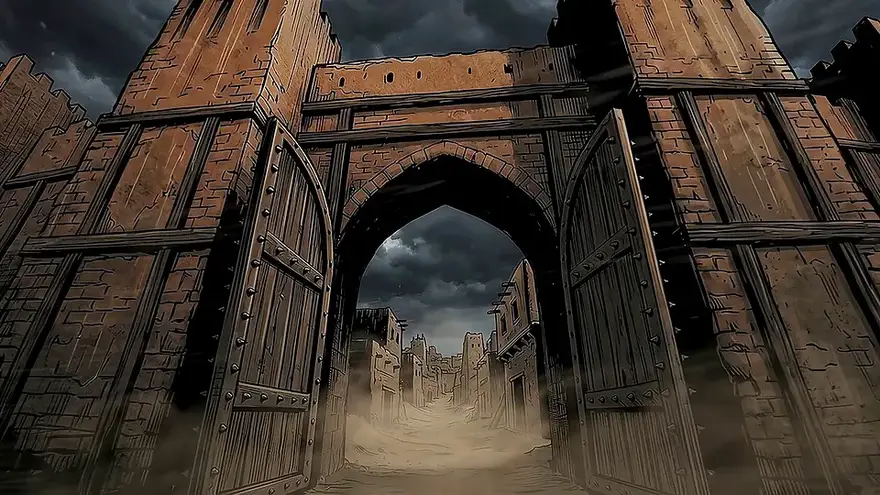
Second Kings 14:25 dates historical Jonah son of Amittai to Jeroboam II's reign (~793–753 BCE)—the exact decades Assyria reeled under weak ruler Ashur-dan III (772–755 BCE), twin plagues (765 & 759 BCE), internal revolt, and the total Bur-Sagale solar eclipse of June 15, 763 BCE. In Mesopotamian omen religion, those disasters screamed divine wrath, making citywide penance in Jonah 3:5–9 historically plausible.
Why Jonah hated Nineveh—and when 2 Kings 14:25 places him
Anyone who has walked past the carved stone reliefs from Nineveh and Nimrud in the British Museum understands immediately why Jonah boarded a ship to Spain rather than preach mercy to Assyria. Neo-Assyrian monarchs proudly chiseled scenes of impaled captives, stacked human skulls, and rebel chiefs flayed alive—earning Nahum 3:1's label 'city of bloodshed.'
At peak Assyrian arrogance under Sennacherib or Ashurbanipal, one lone Hebrew walker shouting 'Yet forty days, and Nineveh shall be overturned!' (Jonah 3:4) might have been executed before noon. Crucially, however, 2 Kings 14:25 anchors Jonah son of Amittai from Gath-hepher a full century earlier during Jeroboam II's reign (~793–753 BCE)—Assyria's weakest, most terrified generation.
2 Kings 14:25 & Jonah 3:4“2 Kings 14:25 — 'According to the word of the LORD, the God of Israel, which he spoke by his servant Jonah the son of Amittai, the prophet, who was from Gath-hepher.' · Jonah 3:4 — 'Yet forty days, and Nineveh shall be overthrown!'”
Why It Matters: Jonah's entire sermon in Hebrew is only five words long, hinging on the punning verb nehpakhet—used in Genesis 19:25 for Sodom being 'overthrown' in fire, and in 1 Samuel 10:6 for Saul being 'turned into another man'—so Nineveh was indeed 'overturned' by repenting!
Scrolls & Archaeology: Assyrian eponym (limmu) clay chronicles (British Museum K.51) record a terrifying cluster of national omens under King Ashur-dan III right during historical Jonah's lifetime (2 Kings 14:25): deadly epidemics in 765 and 759 BCE, civil revolt from 763 to 758 BCE, and the total Bur-Sagale solar eclipse calculated by astronomers to the morning of June 15, 763 BCE right over Nineveh. Notice also Jonah 3:7's odd royal decree draping livestock in sackcloth, corroborated by Greek historian Herodotus (Histories 9.24) reporting Persian general Mardonius's army clipping horses and pack-beasts in public mourning!
Plagues, civil war, and the total Bur-Sagale solar eclipse of June 15, 763 BCE
Open Assyria's cuneiform Eponym Chronicle (limmu list) under King Ashur-dan III (772–755 BCE) and watch the empire reel. Urartian rivals pushed Assyria back, plague struck in 765 BCE, domestic revolt burned from 763 to 758 BCE, and a second plague hit in 759 BCE.
Right in the middle—on June 15, 763 BCE—the moon blotted out the sun across northern Mesopotamia in the famous Bur-Sagale total solar eclipse. In Assyrian Enuma Anu Enlil omen tablets, an eclipse paired with plague meant the gods had decreed the king's and city's doom, triggering emergency citywide appeasement fasts.
Jonah 3:5–6“And the people of Nineveh believed God. They called for a fast and put on sackcloth, from the greatest of them to the least of them. The word reached the king of Nineveh, and he arose from his throne, removed his robe, covered himself with sackcloth, and sat in ashes.”
Sackcloth on cows? Checking Herodotus 9.24 and 'King of Nineveh'
Critics often call Jonah pure satire because Jonah 3:7–8 drapes cattle in sackcloth and titles the ruler 'King of Nineveh' rather than 'King of Assyria.' Yet both details fit genuine Near Eastern custom.
Greek historian Herodotus (Histories 9.24) records Persian general Mardonius and his army shearing their horses and pack-animals in public mourning over fallen commander Masistius (compare Judith 4:10)—proving eastern empires inducted livestock into state penance. Meanwhile, Hebrew writers routinely named foreign monarchs by capital city (like calling Ahab 'King of Samaria' in 1 Kings 21:1), especially during Ashur-dan III's fractured decade.
Jonah 3:7–8“By the decree of the king and his nobles: Let neither man nor beast, herd nor flock, taste anything. Let them not feed or drink water, but let man and beast be covered with sackcloth, and let them call out mightily to God.”

Why Jonah 3 uses 'Elohim'—and why Nahum judged Nineveh a century later
Did Nineveh permanently convert to Torah Judaism? Notice Jonah 3:5–10 in Hebrew: Nineveh responds to Elohim (the general Hebrew word for Deity, rather than covenant YHWH) by halting civic violence (chamas) in hope God may relent—and YHWH spares that generation without demanding Temple sacrifice.
That mercy drives chapter 4's punchline, exposing how Jonah wanted grace hoarded for Israel while sulking over a shade plant. Sadly, Nineveh's pause faded within a generation: under Tiglath-Pileser III (745 BCE), Assyria resumed brutal conquest, crushing Samaria in 722 BCE until Nahum foretold Nineveh's 612 BCE fall.
Jonah 3:10 & 4:11“Jonah 3:10 — 'When God (ha-Elohim) saw what they did, how they turned from their evil way, God relented of the disaster.' · Jonah 4:11 — 'And should not I pity Nineveh, that great city, in which there are more than 120,000 persons... and also much cattle?'”
8th-Century Assyrian Cuneiform Crisis vs. Jonah 3
Why mid-700s BCE Nineveh was uniquely primed for an apocalyptic doom oracle.
| Year / Source | Recorded Event in Cuneiform / History | Connection to Jonah 3 |
|---|---|---|
| ~785–753 BCE (2 Kings 14:25) | Ministry of historical Jonah son of Amittai | Places Jonah directly inside Assyria's mid-century slump |
| 765 & 759 BCE (Eponym List) | Major epidemic plagues strike Assyria | Heightened dread of divine displeasure across Assyrian cities |
| June 15, 763 BCE (Bur-Sagale) | Total solar eclipse darkens northern Mesopotamia | Read in Enuma Anu Enlil omens as impending royal/civic overthrow |
| Herodotus, Histories 9.24 | Eastern armies dress/shear horses & beasts in mourning | Parallels Jonah 3:8's royal decree putting sackcloth on livestock |
| 612 BCE (Babylonian Chronicle) | Medes and Babylonians sack relapsed Nineveh | Fulfills Nahum's later judgment a century after Jonah's reprieve |
What to Remember
- Assyria's own cuneiform Eponym Chronicle records a rare mid-eighth-century crisis of plague, civil rebellion, and the June 15, 763 BCE total solar eclipse right during Jonah's lifetime (2 Kings 14:25).
- Draping mourning sackcloth over horses and livestock in Jonah 3:8 matches real Near Eastern royal mourning customs documented independently by Greek historian Herodotus (Histories 9.24).
- Jonah 3 depicts a temporary crisis turn from violence (chamas) toward Elohim—sparing that generation while setting up Jonah's bitter prejudice in chapter 4 and Nineveh's eventual relapse under Nahum.