
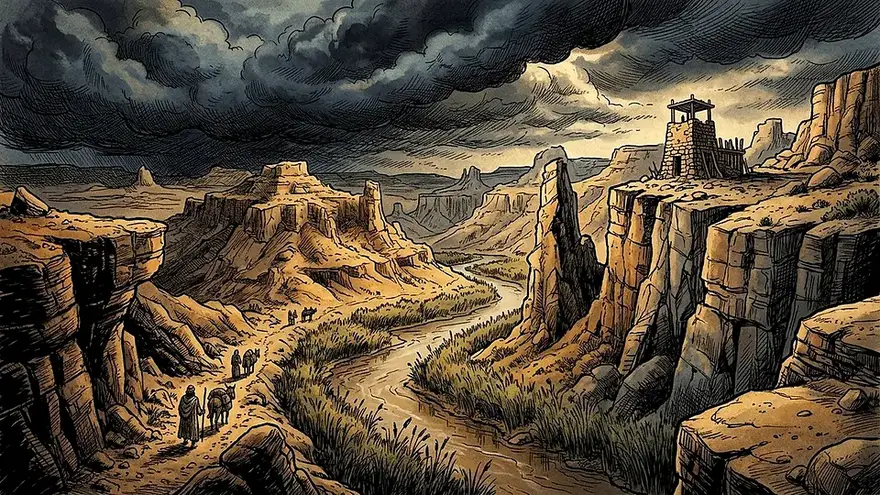
In Biblical Hebrew, benei ha-nevi'im ('sons of the prophets') is a craft-guild idiom meaning 'members of the prophetic guild,' never biological offspring—proven by shepherd Amos protesting in Amos 7:14, 'I am neither a prophet nor a son of a prophet!' Across Samuel and Kings, these covenant communities trained under mentors like Samuel and Elisha at Ramah, Bethel, Jericho, and Gilgal.
Why 'son of a prophet' means guild apprentice—proven by Amos 7:14
Read 2 Kings 2:3 in English—'The sons of the prophets at Bethel came out to Elisha'—and it sounds like a boarding school for preachers' kids. In Semitic usage, however, ben ('son of') is the everyday idiom for belonging to a professional guild: Nehemiah 3:8, 31 calls perfumers 'sons of the perfumers' and goldsmiths 'sons of the goldsmiths.'
Eighth-century Judean fig-dresser Amos clinches the meaning in Amos 7:14. Confronted by Bethel's royal priest Amaziah, Amos snaps back: 'I am no prophet, nor a son of a prophet (ben-navi); I am a herdsman!' God drafted him straight off a sheep ranch outside every prophetic academy.
Amos 7:14–15“Then Amos answered and said to Amaziah, 'I was no prophet, nor a son of a prophet (lo-navi anokhi we-lo ven-navi anokhi), but I was a herdsman and a dresser of sycamore figs. But the LORD took me from following the flock.'”
Why It Matters: Because Hebrew nominal sentences contain zero tense verb ('was' vs. 'am'), translations still split over Amos's timeline—yet all modern Hebraists agree ben-navi ('son of a prophet') denotes certified guild membership rather than Amos's dad's occupation!
Scrolls & Archaeology: Across Semitic languages from Akkadian (mār ummâni, 'son of an artisan' = guild craftsman) to Nehemiah 3:8 (ben-ha-raqqachim, 'member of the perfumers' guild,' never 'biological son of ointments'), 'son of X' marks trade-guild affiliation. Second-millennium BCE cuneiform letters from Mari on the Euphrates (ARM 26, c. 1770 BCE) document comparable bands of salaried court prophets and ecstatic seers against whom Amos contrasts his independent Judean ranching livelihood.
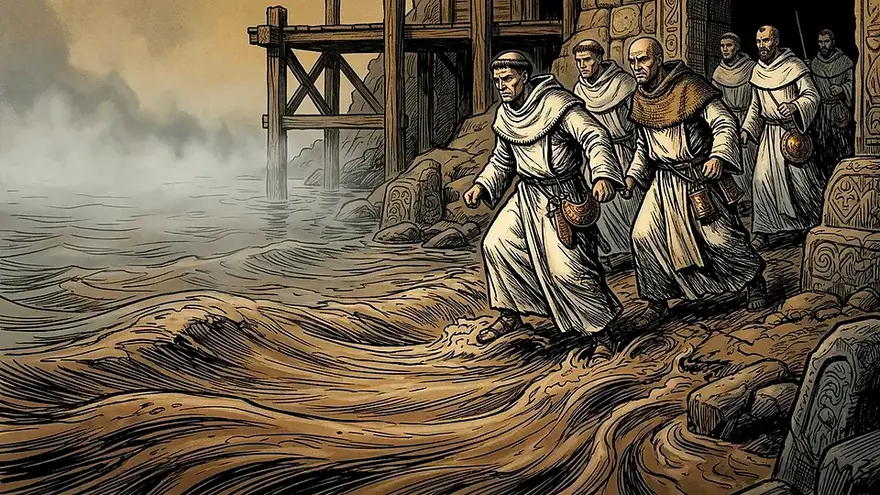
Harps, tambourines, and Samuel's sanctuary bands at Ramah
Popular imagination pictures every Hebrew prophet as a solitary desert hermit like Elijah in camel hair. Yet as Israel transitioned from tribal judges to monarchy in 1 Samuel 10:5–10, young Saul met a lively band (chevel) of prophets marching down from Gibeah's hilltop shrine preceded by four instruments—harp (nevel), tambourine (tof), flute (chalil), and lyre (kinnor)—in contagious Spirit-filled praise!
Nine chapters later at Naioth ('camp/meadows') in Ramah, aging judge Samuel stands presiding as headmaster over an entire prophetic company (1 Samuel 19:20). Across this guild model, the senior master bore the honorific title 'Father' (av—hence Elisha crying 'My father, my father!' as Elijah ascends in 2 Kings 2:12).
1 Samuel 10:5 & 19:20“1 Samuel 10:5 — 'You will meet a group of prophets coming down from the high place with harp, tambourine, flute, and lyre before them, prophesying.' · 1 Samuel 19:20 — 'They saw the company of the prophets prophesying, and Samuel standing as head over them.'”
Underground resistance campuses under Jezebel and Elisha
When Phoenician princess Jezebel married King Ahab in ninth-century BCE Samaria and hunted YHWH's prophets (1 Kings 18:4), palace official Obadiah secretly hid a hundred prophets fifty to a cave on bread and water. By Elijah's final journey, resilient benei ha-nevi'im communities had regathered at three strategic towns—Bethel, Jericho, and Gilgal (2 Kings 2:1–7).
Under Elisha, we glimpse their classrooms and kitchens. In 2 Kings 4:38, guild members literally 'sit before' Elisha (yoshvim lefanav, the exact posture Paul later describes at Gamaliel's feet in Acts 22:3), raise families in deep poverty (4:1), and carry oil flasks to anoint rebel king Jehu (9:1–3).
2 Kings 2:3 & 4:38“2 Kings 2:3 — 'And the sons of the prophets who were in Bethel came out to Elisha.' · 2 Kings 4:38 — 'And Elisha came again to Gilgal when there was a famine in the land. And as the sons of the prophets were sitting before him, he said to his servant, Set on the large pot.'”

Why a sunken borrowed axehead caused panic in 2 Kings 6:1–7
Nothing captures the blue-collar reality of Israel's prophetic guilds better than 2 Kings 6:1–7. Outgrowing their cramped room, the students ask Elisha's permission to hike down to the Jordan River, fell timber beams with their own hands, and build a larger hall.
Mid-swing, a heavy iron axehead (ha-barzel) slips off its handle into the muddy Jordan, and the student cries out: 'Alas, my master! For it was borrowed!' (ve-hu sha'ul). In early Iron Age Israel, smelted iron tools cost months of peasant wages and unpaid loss risked debt-servitude (2 Kings 4:1)—until Elisha tossed in a stick and floated the iron head back.
2 Kings 6:1–6“Now the sons of the prophets said to Elisha, 'See, the place where we dwell under your charge is too small for us. Let us go to the Jordan, and each of us get there a log.' ... As one was felling a log, his axe head fell into the water, and he cried out, 'Alas, my master! It was borrowed.'”
Prophetic Campuses & Guild Episodes Across Samuel and Kings
Every major appearance of Israel's communal prophetic brotherhoods in the Hebrew Bible.
| Location & Era | Biblical Passage | Mentor ('Father') | Signature Scene |
|---|---|---|---|
| Gibeah & Naioth in Ramah | 1 Samuel 10:5; 19:20 | Samuel | Processional harps, lyres, and tambourines; Samuel presiding over guild |
| Northern Caves (Samaria) | 1 Kings 18:4, 13 | Elijah / Obadiah | 100 prophets hidden 50 per cave during Queen Jezebel's purge |
| Bethel & Jericho | 2 Kings 2:3–18 | Elijah → Elisha | 50 guild members watch Elisha part the Jordan with Elijah's cloak |
| Gilgal & Jordan Bank | 2 Kings 4:38–41; 6:1–7 | Elisha | Poisoned wild-gourd famine stew healed; borrowed iron axehead floats |
What to Remember
- Hebrew ben- ('son of') regularly denotes guild or class membership—just as 'sons of the goldsmiths' (Nehemiah 3:31) means professional goldsmiths and Amos 7:14 contrasts a lone shepherd with guild-trained prophets.
- Beginning under Samuel at Ramah and flourishing under Elijah and Elisha at Bethel, Jericho, and Gilgal, prophetic guilds preserved YHWH worship during Queen Jezebel's ninth-century BCE Baal purge.
- Stories of poisoned wild-gourd stew (2 Kings 4:38–41), a prophet's impoverished widow (4:1), and a borrowed iron axehead sinking in the Jordan (6:1–7) reveal their gritty, communal daily poverty.