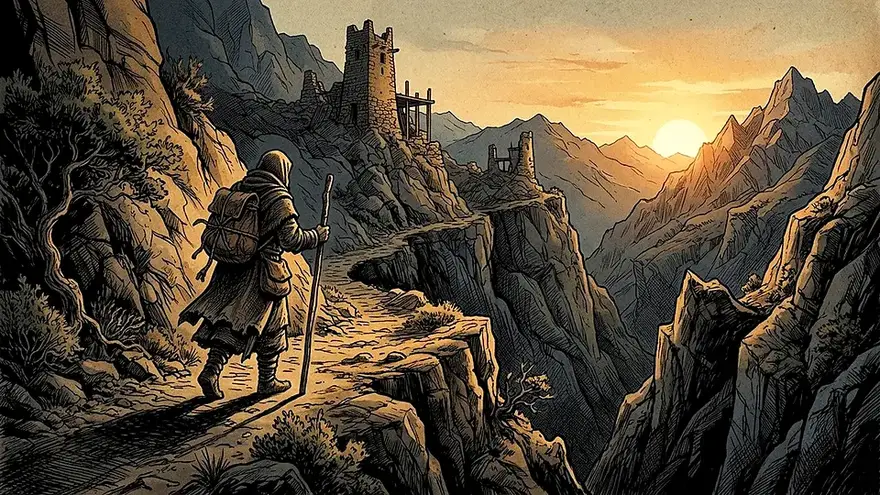
Samaritans (Samareitai / Shamerim) claimed pure Israelite descent from Ephraim and Manasseh, guarding their Samaritan Pentateuch and worshiping on Mount Gerizim rather than Jerusalem, while Judeans cited 2 Kings 17:24 to label them Assyrian-mixed outsiders. After John Hyrcanus burned Gerizim's temple (111 BCE) and Samaritans scattered human bones in Jerusalem's Temple (~6 CE), Luke 10:33 shocked everyone.
Estranged cousins, one Moses, two rival sacred mountains
Centuries of hospital charities and 'Good Samaritan' laws have scrubbed all the shock out of the word Samaritan. In first-century Galilee and Judea, Samaritans were not distant pagans worshiping Zeus; they worshiped YHWH, kept strict Sabbath and kosher laws, practiced circumcision, and guarded their own ancient paleo-Hebrew scroll of Moses's five books—the Samaritan Pentateuch.
Why the bitter schism? Samaritans rejected Joshua, the Prophets, David's Psalms, and Jerusalem itself! Where Jewish Bibles read that God 'will choose' a central sanctuary (identified with Jerusalem), the Samaritan Ten Commandments explicitly command building God's sole stone altar atop Mount Gerizim overlooking Shechem—where Abraham and Joshua once built altars.
John 4:9, 20“John 4:9 — 'How is it that you, a Jew, ask for a drink from me, a woman of Samaria? (For Jews have no dealings with Samaritans.)' · John 4:20 — 'Our fathers worshiped on this mountain [Gerizim], but you say that in Jerusalem is the place.'”
Why It Matters: For centuries scholars assumed Samaritans forged 'Mount Gerizim' into Deuteronomy 27:4 to justify John 4:20 ('our fathers worshiped on this mountain')—until non-Samaritan Old Latin and Greek manuscripts proved 'Mount Gerizim' was likely the OLDER original reading!
Scrolls & Archaeology: Because Old Latin Codex Lugdunensis (VL 100) and Greek Papyrus Giessen 19 have zero Samaritan connection yet still read 'Mount Gerizim' in Deuteronomy 27:4, modern textual critics like Emanuel Tov and Eugene Ulrich conclude Judean scribes polemically altered 27:4 to 'Mount Ebal' during 2nd-century BCE Hasmonean hostilities. Excavating Mount Gerizim's summit from 1984 to 2004, archaeologist Yitzhak Magen uncovered a massive Persian-era Yahweh temple precinct built around 450 BCE (centuries older than Josephus thought!) surrounded by nearly 400 Hebrew and Aramaic pilgrim inscriptions.
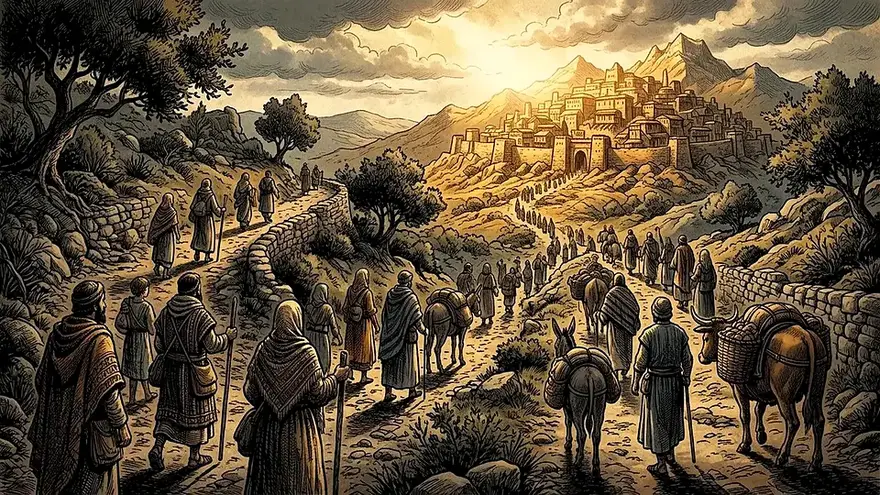
722 BCE Assyrian exile (2 Kings 17) vs. archaeological & DNA evidence
Ask a first-century Judean scribe where Samaritans came from and he pointed to 2 Kings 17:24–41: after Assyria conquered Samaria in 722 BCE, kings deported Israelites and settled foreigners from Babylon and Cuthah (hence the rabbinic slur Kutim), who blended foreign idols with YHWH worship.
Samaritans answered they were unexiled Israelites of Ephraim and Manasseh—calling themselves Shamerim ('Keepers of the Torah'). Modern genetics and archaeology confirm pieces of both: Sargon II's Annals record exiling 27,290 elites while rural Israelites remained (matching modern Samaritan Y-chromosome DNA!), and Yitzhak Magen excavated a fifth-century BCE Yahweh temple complex atop Mount Gerizim.
2 Kings 17:24“And the king of Assyria brought people from Babylon, Cuthah, Avva, Hamath, and Sepharvaim, and placed them in the cities of Samaria instead of the people of Israel.”
111 BCE Temple burning—and corpse bones dumped in Jerusalem at Passover (~6 CE)
Two violent flashpoints turned doctrinal rivalry into raw hatred right before Jesus's lifetime. First, around 111 BCE, Jewish Hasmonean ruler John Hyrcanus marched north and burned the Samaritans' beloved Mount Gerizim temple and city to rubble—so when the woman at Sychar points up at 'this mountain' in John 4:20, she points at ruins torched by Judean troops!
Second, historian Josephus (Antiquities 18.29–30) records payback around 6–9 CE, during Jesus's boyhood: at Passover midnight, Samaritans slipped inside Jerusalem's unlocked Temple gates and scattered human corpse bones across the priestly porticoes, defiling the entire feast (Numbers 19:16).
Luke 9:52–55“They entered a village of the Samaritans, to make preparations for him. But the people did not receive him, because his face was set toward Jerusalem. And when his disciples James and John saw it, they said, 'Lord, do you want us to tell fire to come down from heaven and consume them?'”
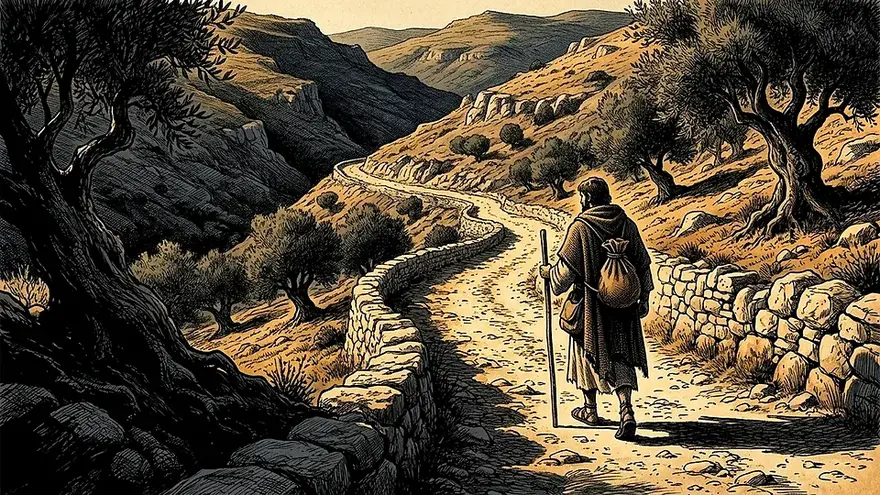
Why Luke 10:33 dropped like a thunderbolt—and the 850 Samaritans alive today
Step back into Jesus's audience in Luke 10:30–37. A beaten Jew lies half-dead on the Jericho pass: a priest crosses the road, a Levite hurries by, and listeners expect an ordinary Jewish layman in slot three—until Jesus drops the shock: 'But a Samaritan... had compassion.' Even in verse 37, the lawyer cannot bring himself to utter the word 'Samaritan,' saying only: 'The one who showed him mercy.'
Remarkably, Samaritans never vanished. Despite centuries of decline down to 146 survivors in 1917, roughly 850 Samaritans live today at Mount Gerizim and Holon, still keeping Passover atop Mount Gerizim every spring!
Luke 10:33, 36–37“But a Samaritan, as he journeyed, came to where he was, and when he saw him, he had compassion... 'Which of these three, do you think, proved to be a neighbor?' He said, 'The one who showed him mercy.'”
First-Century Jews vs. Samaritans: Shared Roots, Bitter Divide
Why two Torah-observant neighbors treated each other's cups as ritually unclean (John 4:9).
| Category | First-Century Judeans & Galileans | First-Century Samaritans (Shamerim) |
|---|---|---|
| Biblical Canon | Torah + Prophets + Writings (24/39 books) | Samaritan Pentateuch alone (Genesis–Deuteronomy only) |
| Chosen Sacred Mountain | Mount Zion / Temple Mount in Jerusalem | Mount Gerizim overlooking Shechem (Nablus) |
| Expected Messiah Figure | Anointed King from David's royal line | Taheb ('Restorer'), a prophet like Moses from Deuteronomy 18:18 |
| Key Historical Grievance | 6–9 CE corpse bones scattered in Herod's Temple | 111 BCE destruction of Mount Gerizim temple by John Hyrcanus |
| Modern Community | ~15.8 million Jews worldwide | ~850–900 Samaritans living on Mount Gerizim & in Holon |
What to Remember
- Judeans and Samaritans fought not as strangers, but as estranged biblical cousins claiming the same Moses while clashing fiercely over Mount Zion versus Mount Gerizim (John 4:20) and a five-book Torah canon.
- Two violent flashpoints poisoned first-century relations: Jewish Hasmonean king John Hyrcanus razing the Samaritan temple on Mount Gerizim (~111 BCE), and Samaritans scattering human bones in Herod's Temple at Passover (~6–9 CE).
- Samaritans never went extinct: roughly 850–900 Samaritans still live at Mount Gerizim and Holon today, sacrificing Passover lambs atop Mount Gerizim every spring.