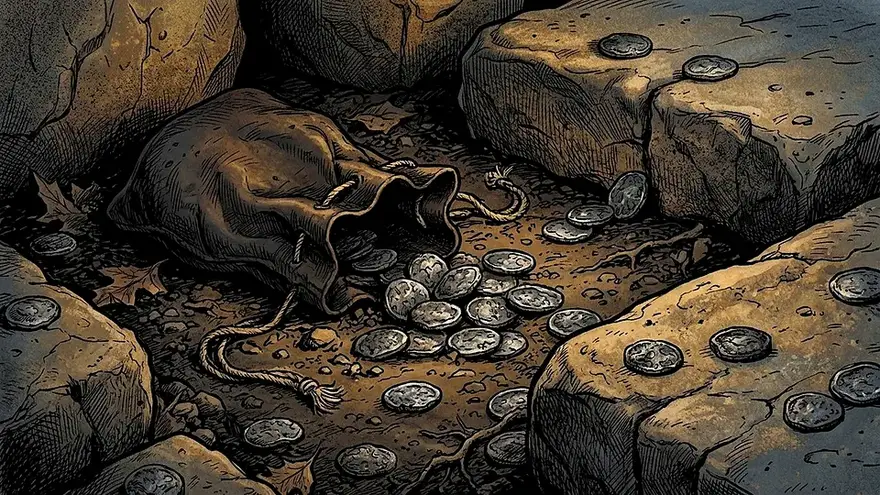
Matthew 27:5 reports Judas threw his thirty silver coins into the Temple and 'went and hanged himself' (Greek apēnxato), after which priests bought the potter's field. Acts 1:18 says Judas acquired a field and 'falling headlong, burst open in the middle' (prēnēs genomenos elakēsen mesos). Harmonizers cite a snapped rope over Akeldama's cliffs; historians trace Ahithophel vs. Maccabean echoes.
Putting Matthew 27:3–10 and Acts 1:18–19 side by side without flinching
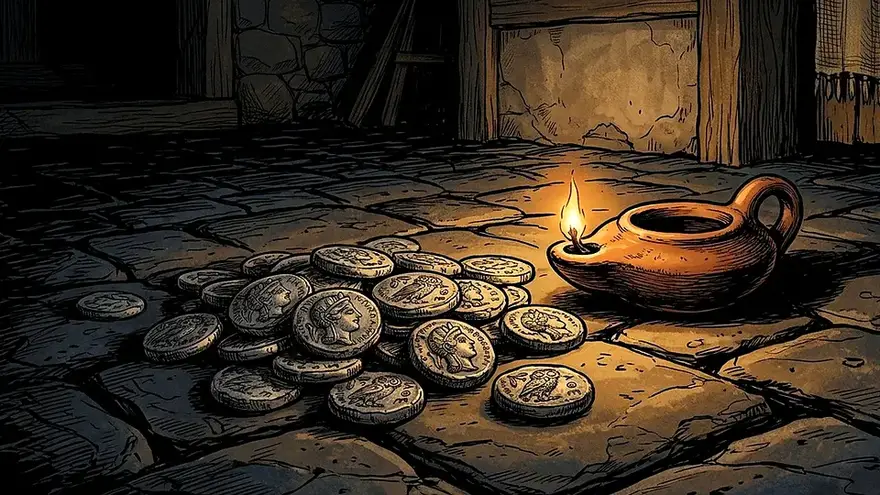
Compare both passages candidly. In Matthew 27:3–8, remorseful Judas flings thirty silver pieces onto the Temple sanctuary floor (eis ton naon), goes off, and hangs himself (apēnxato). Refusing to put 'blood money' (timē haimatos) into the sacred treasury, the chief priests buy the potter's field—calling it 'Field of Blood.'
Now turn to Acts 1:18–19: 'Now this man acquired (ektēsato) a field with the reward of his wickedness, and falling headlong (prēnēs genomenos) he burst open in the middle (elakēsen mesos) and all his bowels gushed out.' Same traitor, same Passover week, same Aramaic plot (Akeldama)—three stark surface differences.
Matthew 27:5 & Acts 1:18“Matt 27:5 — 'Throwing down the pieces of silver into the temple, he departed, and he went and hanged himself.' · Acts 1:18 — 'Falling headlong he burst open in the middle and all his bowels gushed out.'”
Why It Matters: KJV's narrow 'purchased a field' sharpened the clash with Matthew 27:7 (where the priests buy the potter's field), whereas Greek ektēsato broadly means 'came to acquire'—an ironic dark pun on Judas gaining only a burial plot from his blood money.
Scrolls & Archaeology: Matthew's rare Greek verb apēnxato ('went and hanged himself') appears only once in the entire Septuagint Old Testament—2 Samuel 17:23, describing King David's trusted table-friend Ahithophel hanging himself after betraying Israel's anointed king! Conversely, Acts 1:18 frames Judas's end with vocabulary straight out of Wisdom 4:19 (rhēxei autous prēneis, 'dash them headlong and speechless') and tyrant Antiochus IV's ruptured entrails in 2 Maccabees 9:7–9.
Steep Hinnom cliffs & legal agency: How Augustine harmonized both accounts
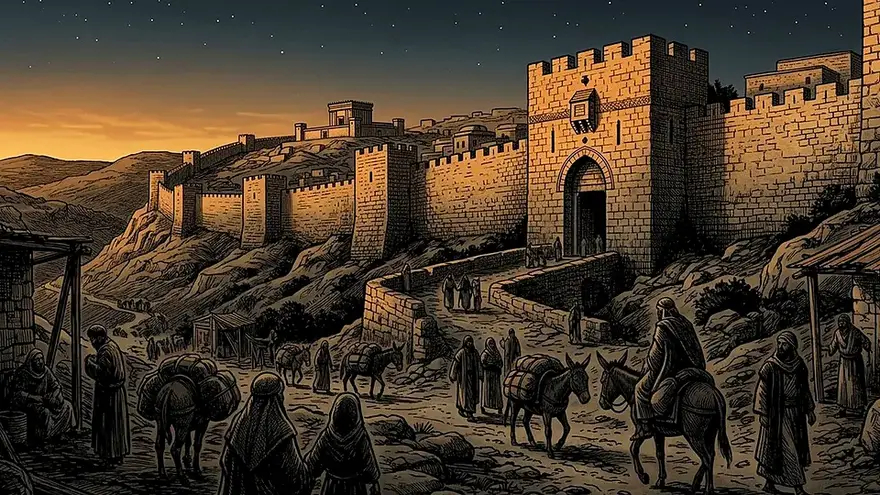
South of Mount Zion, traditional Akeldama sits where the Hinnom Valley plunges down sheer limestone cliffs above ancient potters' clay beds. Around 400 CE, Augustine noted Matthew tells how Judas ended his life while Acts describes the gruesome aftermath when a hanging rope or branch snapped, pitching the bloated corpse onto jagged rocks below.
What about 'this man acquired a field' (Acts 1:18) versus the priests buying it (Matthew 27:7)? Under Jewish legal agency, land purchased with tainted silver to keep Temple funds clean was registered in the coin-owner's name—turning Acts 1:18 into dark irony: Judas's betrayal bought only his graveyard.
Acts 1:19“And it became known to all the inhabitants of Jerusalem, so that the field was called in their own language Akeldama, that is, Field of Blood.”
Ahithophel's rope vs. Antiochus's bowels: Literary artistry in Matthew and Luke
Modern historians point out Matthew and Luke also frame Judas through two classic Scripture templates. Matthew's rare Greek verb apēnxato ('hanged himself') appears only once in the Greek Old Testament: 2 Samuel 17:23, when King David's trusted advisor Ahithophel betrays Israel's anointed king and hangs himself—paired with Zechariah 11:12–13's thirty silver pieces.
Luke instead echoes Second Temple 'death-of-the-tyrant' stories—especially 2 Maccabees 9:5–9 (where Antiochus IV plunges from his chariot and rots from the bowels) and Wisdom 4:19 ('dashed headlong [prēneis]'). Matthew spotlights self-destructive betrayal of David's Son; Acts spotlights divine judgment.
2 Samuel 17:23 (Septuagint: apēnxato)“When Ahithophel saw that his counsel was not followed, he saddled his donkey and went off home to his own city. He set his house in order and hanged himself (apēnxato).”
Papias's grotesque 2nd-century third legend—and why the Gospels stay restrained
Want to see genuine legendary embellishment by contrast? Around 120 CE, Bishop Papias of Hierapolis recorded a stomach-churning third tale: Judas survived Good Friday, swelled wider than a passing wagon with eyes buried in worms, and burst open on his own estate, leaving a stench nobody could pass.
Beside Papias's monster-fable, Matthew 27 and Acts 1 look strikingly restrained. Whether two Jerusalem memories converged on Akeldama (one from Temple priests, one from locals finding the ruptured body on the rocks) or fused hanging with fall, both canonical writers keep Judas's tragedy stark and brief.
Matthew 27:3–4“Then when Judas, his betrayer, saw that Jesus was condemned, he changed his mind and brought back the thirty pieces of silver to the chief priests and the elders, saying, 'I have sinned by betraying innocent blood.'”
Matthew 27 vs. Acts 1: Judas's Death & Field of Blood Matrix
Compare every Greek phrase across the New Testament's two accounts of Judas Iscariot's end.
Matthew 27:5 says Judas 'went and hanged himself.' Acts 1:18 says 'falling headlong, he burst open in the middle.' Traditional harmonizers sequence both (a branch/rope over Hinnom's cliffs snapping); literary scholars see Old Testament typology echoing Ahithophel (2 Sam 17:23) vs. Antiochus IV (2 Macc 9:7–9).
In Matthew, chief priests refuse to put 'blood money' into the Temple treasury and buy the Potter's Field with Judas's 30 coins. Acts says Judas 'acquired a field with the reward of his wickedness'—standard ancient rhetorical irony since his money paid for his own burial plot.
Matthew traces the name 'Field of Blood' to the priests' 'blood money' (timē haimatos) for Jesus's life; Jerusalem locals in Acts 1:19 linked the Aramaic nickname Akeldama to Judas's gruesome fall on the rocky terrace.
Side-by-Side Comparison: Matthew 27, Acts 1, and Papias
Comparing every detail across the three earliest accounts clarifies where Matthew and Acts align on Jerusalem geography and where their lenses diverge.
| Detail | Matthew 27:3–10 | Acts 1:18–19 | Papias Fragment (~120 CE) |
|---|---|---|---|
| How Judas Dies | Went away and hanged himself (apēnxato) | Fell headlong (prēnēs) and burst open in the middle | Lived on, swelled wider than a wagon, died on his own land |
| What Happens to the 30 Coins | Thrown into the Temple; priests buy potter's field | Judas 'acquired a field with the reward of wickedness' | No mention of the thirty silver coins |
| Why Called 'Field of Blood' | Purchased with 'blood money' (timē haimatos) for Jesus | Named Akeldama after Judas's grisly ruptured fall there | Estate left desolate from unbearable stench |
| Old Testament / Literary Echo | 2 Sam 17:23 (Ahithophel hangs himself) & Zech 11:12–13 | 2 Macc 9:7–9 (Antiochus falls & ruptures) & Ps 69:25 | 2nd-century folkloric divine-affliction legend |
What to Remember
- Matthew 27:3–10 and Acts 1:18–19 agree Judas died suddenly around Passover and became tied to a real southern Jerusalem burial plot Aramaic speakers called Akeldama ('Field of Blood').
- They diverge on three details: hanging vs. falling headlong and rupturing, priests vs. Judas buying the land, and 'blood money' vs. spilled entrails explaining the field's grim name.
- Ancient readers offered two paths still debated today: Augustine's cliffside hanging-then-fall sequence, or distinct theological portraits echoing 2 Samuel 17 and 2 Maccabees 9.