In early Caesarean Greek manuscripts (Codex Koridethi Θ, Family 1), the Sinaitic Syriac, and Armenian texts of Matthew 27:16–17, the prisoner's full name is Iēsous Barabbas ('Jesus Barabbas'). In Aramaic, Yeshua Bar-Abba literally means 'Jesus, Son of the Father'—turning Pilate's Passover question into a stark choice between two men embodying opposite visions of Israel's deliverance.
Why Pilate's grammar in Matthew 27:17 clicks once you restore the missing name
Read Matthew 27:17 in older translations and notice how oddly Pilate phrases the choice: 'Whom do you want me to release for you: Barabbas, or Jesus who is called Christ?' Nobody in Jerusalem needed the extra label 'who is called Christ' simply to tell 'Jesus' apart from 'Barabbas.'
Put back the reading preserved in ninth-century Codex Koridethi (Θ), minuscule Family 1, the fourth-century Sinaitic Syriac palimpsest, and early Armenian manuscripts—now printed in the main text of the NRSV and footnoted in the ESV and NIV—and Pilate's sentence snaps into sharp focus: 'Whom do you want me to release for you, Jesus Barabbas or Jesus who is called the Messiah?'
Matthew 27:16–17 (NRSV / Early Caesarean Text)“At that time they had a notorious prisoner, called Jesus Barabbas. So after they had gathered, Pilate said to them, 'Whom do you want me to release for you, Jesus Barabbas or Jesus who is called the Messiah?'”
Why It Matters: Restoring Barabbas's first name 'Jesus' suddenly explains why Pilate adds 'who is called Christ' in verse 17 ('Do you want Jesus Son-of-the-Father [violent rebel], or Jesus called Messiah?')—a shocking parallel later scribes deleted to protect Jesus's name!
Scrolls & Archaeology: Writing in Caesarea around 248 CE, church father Origen explicitly attested that 'in very many manuscripts' (in multis exemplaribus) Barabbas carried the given name Jesus, though Origen himself urged dropping it so no heretic would share the Savior's name. Despite that scribal purge, 'Jesus Barabbas' survived intact in 9th-century Codex Koridethi (Θ, 038), Minuscule Family 1 (f¹), the 4th-century Sinaitic Syriac palimpsest, and early Armenian and Georgian translations.
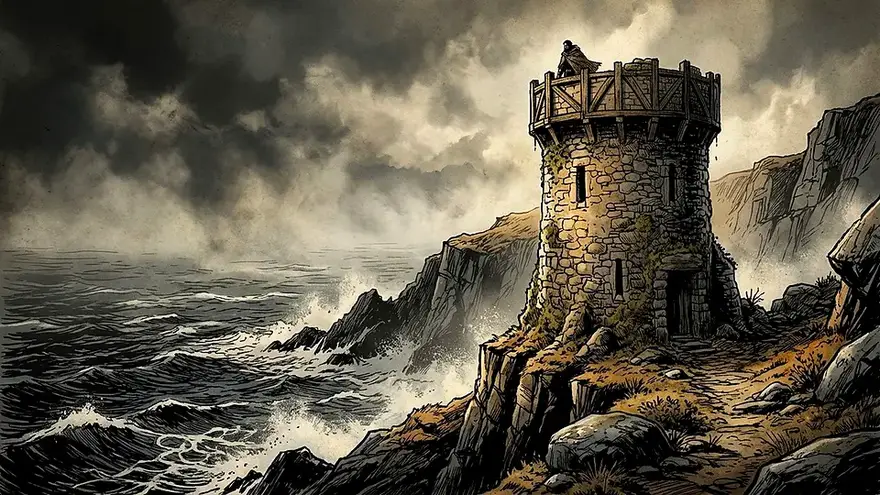
Aramaic 'Yeshua Bar-Abba' literally means 'Jesus, Son of the Father'
Yeshua (contracted Hebrew Joshua, 'YHWH saves') ranked among the six most common male names in Second Temple Judea; Jerusalem limestone ossuaries excavated by archaeologists bear dozens of 'Jesus' inscriptions alongside Simon, Joseph, and Lazarus. To tell men apart, Judeans attached a father's name with Aramaic bar ('son of'), as in Simon Bar-Jonah or Bartimaeus.
Look closely at Bar-Abba: bar ('son of') plus abba ('the father')—literally 'Son of the Father'! Standing side by side on Pilate's stone pavement are two men with identical names: one claiming 'Jesus, Son of the Father' through steel and revolt, the other embodying 'Jesus, Son of the Father' by absorbing violence on the cross.
Matthew 11:27 & Mark 14:36“Matthew 11:27 — 'No one knows the Son except the Father.' · Mark 14:36 — 'And he said, Abba, Father, all things are possible for you.'”
Not a petty pickpocket: Mark 15:7 reveals an anti-Roman guerrilla fighter
John 18:40 calls Barabbas a lēstēs, which the 1611 King James Bible translated 'robber'—making generations picture a common purse-snatcher. Yet first-century historian Flavius Josephus uses lēstai constantly as his technical political word for Judean guerrilla freedom fighters and Sicarii ('dagger-men') ambushing Roman collaborators.
Mark 15:7 and Luke 23:19 spell out his crime: Barabbas was locked up 'with the rebels who had committed murder in the insurrection (stasis).' When the crowd roared for Jesus Barabbas instead of Jesus of Nazareth, Judea stood at a historical crossroads—choosing the armed militancy that would bring Titus's Roman legions crashing onto Jerusalem in 70 CE.
Mark 15:7“And among the rebels in prison, who had committed murder in the insurrection, there was a man called Barabbas.”
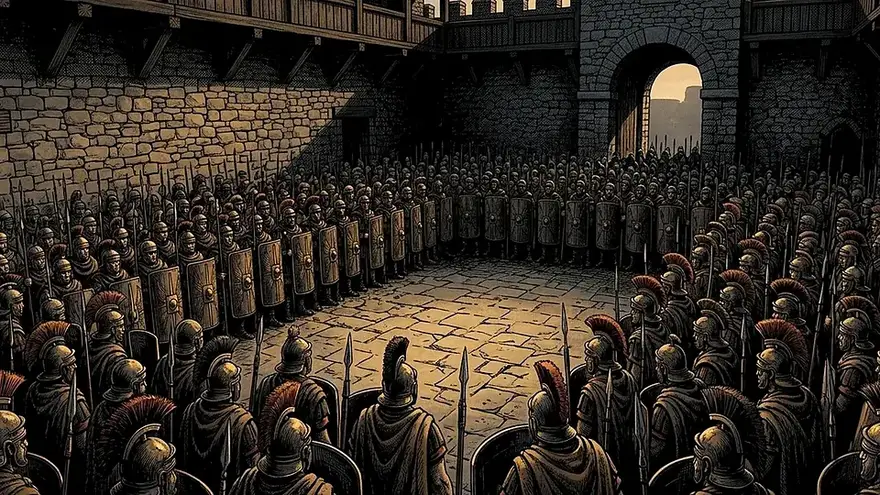
Origen's 3rd-century note: why reverent scribes erased 'Jesus' before Barabbas
If Matthew originally wrote 'Jesus Barabbas,' why is 'Jesus' absent from fourth-century codices like Vaticanus and Sinaiticus? Around 248 CE in Caesarea, church scholar Origen explained why in his Commentary on Matthew: 'In many copies it is not stated that Barabbas was also called Jesus, and perhaps rightly so, that the name of Jesus might not be applied to any wicked man.'
In manuscript detective work, the harder reading that explains the others wins. No Christian scribe would ever dare invent the scandal of giving a murderer Jesus's sacred name—especially once scribes wrote Iēsous as a holy divine abbreviation (nomina sacra)—whereas pious copyists eagerly trimmed 'Jesus' to protect Christ's honor.
Luke 19:41–42“And when he drew near and saw the city, he wept over it, saying, 'Would that you, even you, had known on this day the things that make for peace!'”
Two 'Jesuses' on Pilate's Pavement (Matthew 27:16–26)
How Matthew stages Passover morning as a mirror-image choice between two paths of salvation ('Yeshua').
| Dimension | Jesus Barabbas | Jesus Called Messiah (Christ) |
|---|---|---|
| Given Name | Yeshua / Iēsous ('YHWH Saves') | Yeshua / Iēsous ('YHWH Saves') |
| Title / Patronym | Bar-Abba ('Son of the Father') | Son of the Heavenly Father (Abba, Mark 14:36) |
| Method of Liberation | Armed urban insurrection & bloodshed (Mark 15:7) | Nonviolent self-sacrifice & love of enemies |
| Gospel Verdict | Guilty rebel set free in the innocent man's place | Innocent Messiah condemned to the rebel's cross |
What to Remember
- Early manuscripts of Matthew 27:17 read 'Jesus Barabbas or Jesus who is called Christ,' explaining why Pilate had to add 'who is called Christ' to distinguish the two prisoners.
- Aramaic Bar-Abba means 'Son of the Father'—pitting a violent anti-Roman insurgent ('Jesus, Son of the Father') directly against the peaceful Son of the Father.
- Third-century scholar Origen admitted Christian copyists deleted 'Jesus' before Barabbas so the sacred name would never stand beside a convicted killer.