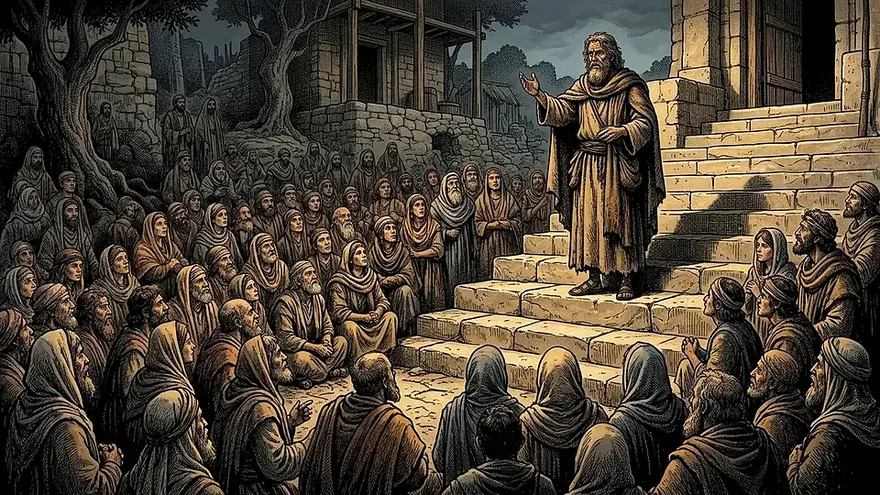
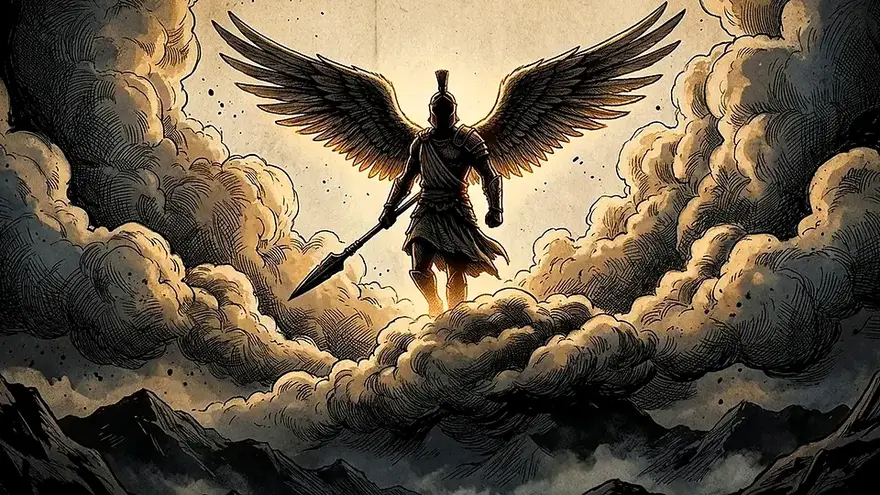
The English word 'rapture' comes from Jerome's Latin Vulgate rapiemur ('we shall be caught up'), translating Greek harpazō in 1 Thessalonians 4:17. Yet Paul pairs it with apantēsis—the technical Roman civic noun for townspeople walking out of city gates to greet an arriving king and escort him straight back onto earth, never a secret pre-tribulation evacuation invented in the 1830s.
Where the English word 'Rapture' actually comes from (Vulgate 'rapiemur')
You will often hear people say, 'The word rapture never appears in the Bible!' That depends on which translation sits on your desk. Writing in Greek around 50 CE to comfort grieving believers in Thessalonica, Paul promises in 1 Thessalonians 4:17 that living Christians will be 'caught up' (harpagēsometha, from harpazō) alongside resurrected saints.
When Jerome translated the New Testament into fourth-century Latin, he rendered harpagēsometha as rapiemur ('we shall be caught up,' from Latin rapio)—the direct root of English 'rapture.' Being caught up to meet Christ is completely biblical; the real question is whether Paul meant an earth-abandoning escape seven years before the end.
1 Thessalonians 4:16–17“For the Lord himself will descend from heaven with a cry of command, with the voice of an archangel, and with the sound of the trumpet of God... Then we who are alive, who are left, will be caught up (harpagēsometha) together with them in the clouds to meet (eis apantēsin) the Lord in the air.”
Why It Matters: Besides KJV's archaic 'prevent' (from Latin praevenire, 'go before/precede'), Jerome's Latin rapiemur gave English the noun 'Rapture'—yet Greek apantēsis always describes citizens walking out to greet an arriving ruler and escorting him straight back into their city!
Scrolls & Archaeology: German historian Erik Peterson demonstrated in 1930 from dozens of Hellenistic civic decrees and papyri—confirmed inside the New Testament itself by Matthew 25:6 and Acts 28:15 (where Roman believers walk out to Three Taverns eis apantēsin and immediately escort Paul into Rome)—that welcoming delegations never turned around to vanish into the sky. Historically, a two-stage secret pre-tribulation evacuation separated by seven years from Christ's return is absent from every Greek, Latin, and Reformation commentary prior to 1830.
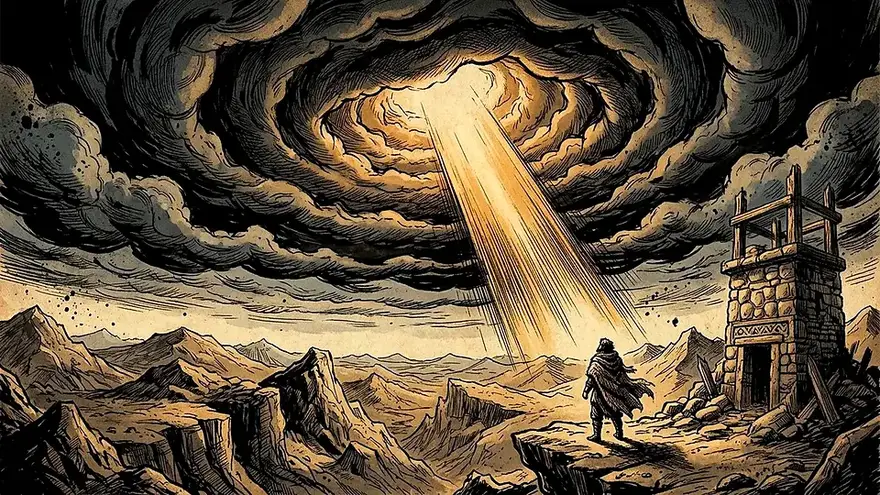
Roman imperial 'apantēsis': greeting the King to escort Him IN, not U-turning away
First, notice that 1 Thessalonians 4:16 is the noisiest public arrival in Scripture—a shouted military command, an archangel's voice, and God's trumpet—the polar opposite of a silent vanishing of drivers from highways. Second, read Paul's Greek political pairing: Christ's parousia ('imperial state visit') is met by an apantēsis ('civic welcome delegation').
In Hellenistic inscriptions, Josephus, and every other New Testament occurrence, apantēsis followed one unmistakable protocol: when an emperor or governor neared a city, citizens walked out past the gates to honor him and immediately escorted him back inside! In Acts 28:15, Roman believers walk out to Three Taverns eis apantēsin to greet Paul—and walk straight back into Rome with him.
Acts 28:15 & Matthew 25:6“Acts 28:15 — 'The brothers there, when they heard about us, came as far as the Forum of Appius and Three Taverns to meet us (eis apantēsin hēmin).' · Matt 25:6 — 'Here is the bridegroom! Come out to meet him (eis apantēsin).'”
Who is 'taken' and who is 'left behind' in Matthew 24:39–41?
End-times novels like Left Behind taught millions to read Matthew 24:40–41 ('two men will be in the field; one will be taken and one left') backwards—assuming 'taken' means airlifted to safety while 'left' means stranded under Antichrist. Read the two verses immediately before verse 40!
Jesus compares His coming to 'the days of Noah': crowds ate and drank 'until the flood came and swept them all away' (Matthew 24:39). In Genesis 7, the wicked were swept away, while Noah's family stayed 'left behind' alive on earth—confirmed in Luke 17:37, where Jesus says of the 'taken': 'Where the corpse is, there the vultures will gather.'
Matthew 24:39–41“They were unaware until the flood came and swept them all away, so will be the coming of the Son of Man. Then two men will be in the field; one will be taken and one left.”

Eighteen centuries of one Second Coming—until John Nelson Darby in the 1830s
Read Justin Martyr, Irenaeus, John Chrysostom, Augustine, Thomas Aquinas, Martin Luther, or John Calvin: for eighteen hundred years, Eastern Orthodox, Roman Catholic, and Protestant churches confessed one single visible return of Christ after final tribulation to raise the dead and renew the earth (Revelation 21:2, where New Jerusalem comes down to earth).
Splitting Jesus's return into two events separated by a seven-year gap crystallized in the early 1830s through Anglo-Irish Bible teacher John Nelson Darby and the Plymouth Brethren. Darby's timeline exploded across twentieth-century America when Cyrus Scofield printed pre-tribulation rapture notes directly into the margins of the bestselling 1909 Scofield Reference Bible.
John 17:15 & Revelation 21:2–3“John 17:15 — 'I do not ask that you take them out of the world, but that you keep them from the evil one.' · Rev 21:3 — 'Behold, the dwelling place of God is with man.'”
1 Thessalonians 4:17 Decoded: 'Rapture' vs. Ancient 'Apantēsis'
Trace how one Greek civic welcome term was read for 1,800 years before 1830.
In every other NT appearance—wise bridesmaids going out to meet the bridegroom (Matt 25:6) and Roman believers walking out to Three Taverns to meet Paul (Acts 28:15)—the greeting party immediately escorts the honored guest BACK to their city, never evacuating it!
Greek harpazō ('caught up') became Latin rapiemur ('we shall be caught up'), giving English 'rapture.' The word describes resurrection union at Christ's single visible return (Parousia), not a secret pre-tribulation disappearance.
From the Church Fathers through the Reformers, Christians read 1 Thess 4:16–17 (with loud command, archangel shout, and trumpet!) as the public Last Day. Splitting Christ's return into two stages separated by 7 years was popularized in the 1830s by John Nelson Darby and the 1909 Scofield Reference Bible.
Historic Christian Reading (30–1830 CE) vs. Modern Pre-Tribulation Rapture
Comparing first-century Greek vocabulary and historic creeds with 19th-century dispensational charts.
| Question | Historic Church & Greek Context | Post-1830 'Left Behind' Model |
|---|---|---|
| How Many Returns of Christ? | One visible public Parousia on the Last Day | Two stages: secret Rapture first, public return 7 years later |
| Direction After 1 Thess 4:17? | Apantēsis: believers rise to escort descending King onto renewed earth | U-turn in midair back into heaven while earth burns |
| Sound & Visibility | Shout of command, archangel's voice, trumpet of God (4:16) | Silent disappearance leaving empty clothes and cars |
| Matthew 24:40 'Taken vs. Left' | Wicked swept away like Noah's Flood; faithful preserved | Faithful airlifted away; unbelievers 'left behind' |
What to Remember
- Latin rapiemur (translating Greek harpazō, 'caught up') gave English 'rapture,' describing resurrection union at Christ's single loud, visible Second Coming.
- Greek apantēsis ('royal civic welcome') always described citizens meeting a visiting dignitary outside town in order to escort him straight back into their city—not U-turning away for seven years.
- In Matthew 24:39–41's Noah analogy, those 'taken away' are swept away in judgment by the Flood, while splitting Christ's return into two stages arose in the 1830s under John Nelson Darby.