The noun 'Purgatory' (Latin purgatorium, coined in the 12th century) never appears in any Bible. Instead, the debate hinges on two ancient passages: 2 Maccabees 12:43–46 (where Judas Maccabeus prays and sends silver for fallen soldiers' sin-offerings—inside Catholic and Orthodox Bibles, outside Protestant Bibles) and Paul's 'saved, but only as through fire' metaphor in 1 Corinthians 3:15.
Why searching for the word 'Purgatory' misses the real ancient texts
Type 'Purgatory' into any Bible concordance—Catholic, Orthodox, or Protestant—and you get zero hits. As French medievalist Jacques Le Goff documented in The Birth of Purgatory, Christians spoke for centuries of purifying fire (purgatorius ignis, adjective), yet the Latin noun purgatorium naming a distinct third geography didn't crystallize until the late 1100s (defined at the Councils of Lyons in 1274, Florence in 1439, and Trent in 1563).
Stop there, however, and you miss why brilliant theologians debated this for five hundred years. The dispute isn't over a medieval Latin noun—it turns on how you read two specific ancient texts, and whether one of them belongs inside your Old Testament!
Matthew 12:32 (A Saying Cited by Gregory the Great)“Whoever speaks against the Holy Spirit will not be forgiven, either in this age or in the age to come.”
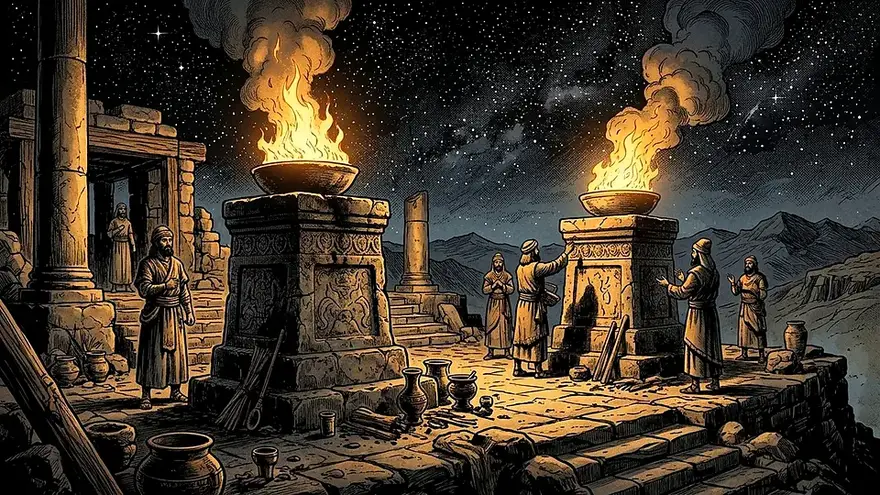
Why It Matters: Not only is 2 Maccabees absent from the Hebrew Tanakh and Protestant canon, its soldiers died wearing forbidden pagan idol amulets (12:40, a mortal sin!), and 1 Corinthians 3:13–15 tests ministers' church-building work 'on the Day' using the simile 'AS through fire.'
Scrolls & Archaeology: French medieval historian Jacques Le Goff demonstrated in The Birth of Purgatory (1981) that while ancient Christians prayed for departed believers, the Latin noun purgatorium ('a purifying place') did not exist in patristic Latin and was coined in Paris cathedral schools around 1170 CE. At the reunion Council of Ferrara-Florence (1438–1439), Greek Orthodox Metropolitan Mark of Ephesus accepted intercession for the dead while firmly rejecting Western Latin doctrines of temporal penal fire.
2 Maccabees 12:43–46: Judas Maccabeus's silver—and the 1519 Leipzig clash
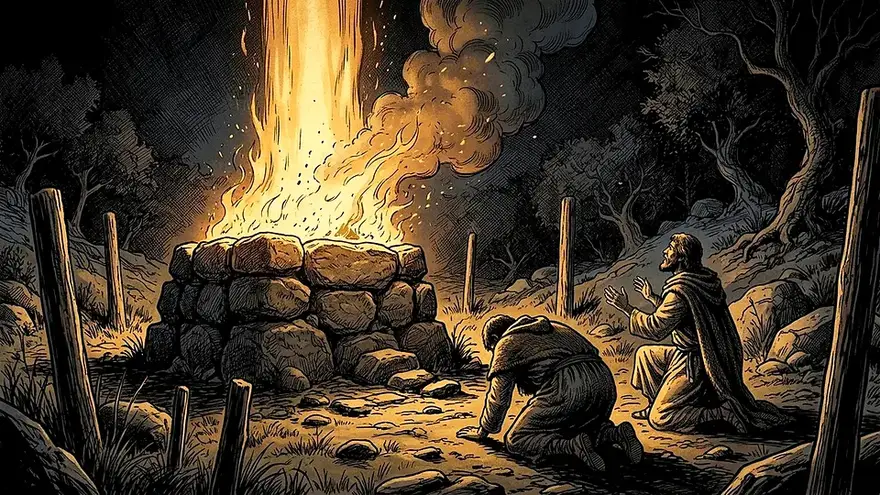
Open a Catholic or Orthodox Bible to 2 Maccabees 12:39–46 (~124 BCE). Burying fallen Jewish soldiers, Judas Maccabeus discovers forbidden Jamnian idol-amulets beneath their tunics. Judas prays their sin be blotted out and sends 2,000 silver drachmas to Jerusalem for a sin-offering—'making atonement (exilasmon) for the dead, so that they might be delivered from their sin.'
When Johann Eck cited 2 Maccabees 12 against Martin Luther at the 1519 Leipzig Debate over Purgatory, Luther countered that 2 Maccabees stood outside the Jewish Hebrew canon (as Jerome had noted)—moving the Deuterocanonical books into a separate, non-doctrinal Apocrypha section.
2 Maccabees 12:44–45“For if he were not expecting that those who had fallen would rise again, it would have been superfluous and foolish to pray for the dead... Therefore he made atonement for the dead, so that they might be delivered from their sin.”
1 Corinthians 3:12–15: Post-mortem purification—or Judgment Day inspection?
Inside the shared 27-book New Testament, debate centers on 1 Corinthians 3:12–15. Paul compares church teachers to builders laying gold, silver, precious stones, wood, hay, or straw atop Christ's foundation; on 'the Day,' fire tests each work, and if it burns up, 'he himself will be saved, yet so as through fire' (hōs dia pyros).
Catholics (Catechism §1030–1031) read Paul's fire alongside Revelation 21:27 as merciful final cleansing of saved believers who die imperfectly sanctified. Protestants counter that Paul's fire inspects teachers' ministry works on Judgment Day ('the Day'), while Christ's cross already perfected believers once for all (Hebrews 10:14).
1 Corinthians 3:13, 15“The Day will disclose it, because it will be revealed by fire, and the fire will test what sort of work each one has done... If anyone's work is burned up, he will suffer loss, though he himself will be saved, but only as through fire.”
The surprising third voice: Why Eastern Orthodoxy prays for the dead WITHOUT Purgatory
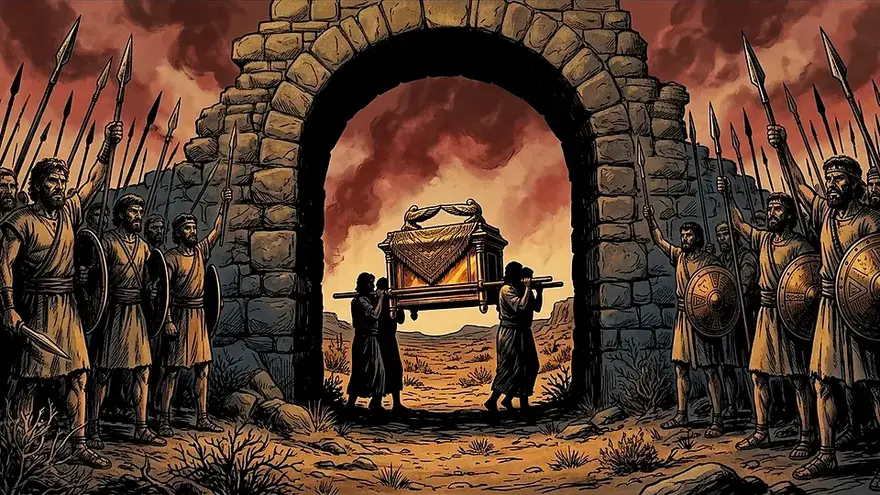
Most Westerners assume only two options exist: either accept 2 Maccabees + Purgatory (Catholic), or drop both (Protestant). Enter the third great branch of Christendom—Eastern Orthodoxy—which flips that binary upside down!
Orthodox Christians keep 2 Maccabees inside their Old Testament and pray fervently for departed souls at every Divine Liturgy (echoing early Christian catacomb inscriptions and 2 Timothy 1:18's prayer for deceased Onesiphorus). Yet at the Council of Ferrara-Florence (1438–39), Orthodox champion St. Mark of Ephesus formally rejected Roman Catholic Purgatory! Orthodoxy rejects Western legal categories of 'temporal debt satisfaction,' 'merit treasuries,' 'indulgences,' and purifying penal fire—viewing post-mortem growth instead as ongoing healing in God's love awaiting the Resurrection.
Hebrews 10:14 & 2 Timothy 1:18“Heb 10:14 — 'For by a single offering he has perfected for all time those who are being sanctified.' · 2 Tim 1:18 — 'May the Lord grant him [Onesiphorus] to find mercy from the Lord on that Day!'”
Three Christian Canons, Three Views of the Afterlife In-Between
Notice how canon boundaries, Greek vs. Latin legal frameworks, and early Christian prayer practices shape each tradition's reading.
| Tradition | Status of 2 Maccabees 12 | Reading of 1 Cor 3:15 | View of Prayers for Dead & Purgatory |
|---|---|---|---|
| Roman Catholic | Canonical Scripture (Hippo 393, Trent 1546) | Supports purifying fire cleansing venial attachments | Affirms both prayers for the dead AND Purgatory (final purification of the elect) |
| Eastern Orthodox | Canonical / Anagignoskomena (Septuagint) | Eschatological testing on Judgment Day, not penal fire | Prays earnestly for the dead; REJECTS Latin Purgatory, temporal debt & indulgences |
| Protestant | Apocrypha (historical, non-canonical) | Final-day inspection of church builders' ministry works | Rejects Purgatory & atoning prayers for dead; redeemed enter Christ's presence immediately (Luke 23:43; Phil 1:23) |
| Rabbinic Judaism | Outside Hebrew Tanakh (historical memory) | N/A | Recites Mourner's Kaddish; classical Gehinnom cleansing capped at max 12 months (Shabbat 33b) |
What to Remember
- Catholic and Orthodox Old Testaments include 2 Maccabees 12:43–46, proving Second Temple Jews already prayed for the dead—while Luther's 66-book Protestant canon follows the shorter Hebrew Tanakh.
- Inside the New Testament, Catholics read Paul's testing fire in 1 Corinthians 3:15 alongside Matthew 12:32 as final purification, whereas Protestants read 1 Corinthians 3 as Judgment Day testing of ministry works.
- Eastern Orthodoxy keeps 2 Maccabees and prays for the departed at every Liturgy, yet formally rejected medieval Latin doctrines of Purgatory and indulgences at Florence (1439).